
The One Who Feels Like You

There is something in the ether right now when it comes to relationships.
Connection feels harder. Relationships seem to be in crisis. People are struggling to find one another, understand one another, trust one another, and perhaps most of all, truly see one another.
And I can’t help but wonder how much of that has to do with the amount of static we’ve created around connection. I don’t stand outside of it, on the contrary, I feel it, but seek beyond all the noise.
We’re constantly being told what attraction means, what compatibility looks like, what our person should feel like, what our relationship should look like, what signs we’re supposed to be compatible with, what red flags to watch for, what green flags to look for.
We are being given an endless stream of information about relationships while becoming increasingly disconnected from the one place where the most important information actually lives:
ourselves.
And when we’re already carrying fear, old wounds, expectations, assumptions and unexamined stories into our relationships, all of that noise creates static in our frequency.
It becomes harder to hear what is actually happening between two human beings.
And perhaps that’s part of why there is so much fascination right now with astrology, compatibility charts and finding “your match.”
Your sign. Their sign. Your moon. Their rising. Your Venus. Their Mars. Compatibility charts, cosmic pairings, algorithms dressed up as ancient wisdom.
And I don’t put a tremendous amount of weight on astrology.
But I do pay attention to patterns.
I pay attention to nature. To human behavior. To psychology. To the strange repetitions that show up across our lives. And when seemingly unrelated things begin lining up in ways that feel meaningful, I notice.
Not because I believe every cosmic meme that crosses my feed.
Quite the opposite.
Social media has become very good at taking something nuanced, turning it into a seven-second sound bite, and handing everyone the exact same conclusion with the variables rearranged to suit whatever story they already want to believe.
And relationships are far too complicated for that.
Because perhaps compatibility isn’t about finding someone whose sign fits neatly beside yours.
Perhaps it’s about finding someone whose inner architecture feels strangely familiar.
I thought about this recently while looking at my own relationship.
I am a Virgo at my core, born in September, with Aries rising.
He is an Aries at his core, born in April, with Virgo rising.
Symbolically, we are almost mirror images.
The fire I wear on the outside, he carries underneath.
The discernment, precision and analytical nature I carry underneath, he wears on the outside.
And suddenly something clicked for me.
Maybe this is why, when I first met him, there was something in me that simply went:
Oh. There you are.
Not because he was easy. Or that I was.
Not because we were the same. Because we are different.
And certainly not because everything suddenly became perfect.
But because something about him felt familiar in a way I couldn’t explain.
And perhaps that’s what we miss when we reduce human connection to compatibility.
The person who really gets you may not be someone who is superficially compatible with you.
It may be someone who carries your contradictions.
Someone who has your fire but expresses it differently.
Someone who has your discipline but wears it differently.
Someone who wants freedom and intimacy simultaneously.
Someone who can be fiercely independent and deeply loyal.
Someone who has an enormous capacity for life and an equally enormous capacity to protect themselves from vulnerability.
Someone who somehow speaks a language you recognize because part of you already speaks it.
That’s where things get interesting.
Because someone who is like you can understand you.
But they can also expose you.
They don’t just touch your heart.
They touch the parts of yourself you haven’t reconciled.
And that can feel like chemistry.
It can feel like fate.
It can feel like home.
Sometimes it is recognition.
Sometimes it is projection.
Sometimes it is both.
And the danger is that recognition can feel like home before either person has earned the safety of home.
That’s why two people can have extraordinary chemistry and still create an absolute psychological demolition derby.
Because the other person isn’t merely triggering you.
They may be reflecting you.
Your stubbornness looks like their stubbornness.
Their defensiveness looks like your defensiveness.
Your independence can feel like rejection to them.
Their need for control can feel like confinement to you.
Your intensity overwhelms them.
Their intensity overwhelms you.
And suddenly you’re not fighting about the thing you’re fighting about.
You’re fighting with the parts of yourselves you haven’t learned how to hold.
Maybe that’s why the idea of a “perfect match” has always felt too simplistic to me.
I don’t think we are looking for someone who completes us.
I think we are looking for someone whose configuration feels familiar to our own psyche.
Enough sameness that they can enter our interior world without needing a map.
Enough difference that they don’t simply become another version of us.
Because pure sameness gets stagnant.
Pure difference gets lonely.
But recognition plus polarity can be extraordinary.
The deepest compatibility might not be:
We fit.
Maybe it is:
You recognize something in me that I have never been able to explain, and I recognize something in you because it lives in me too.
And maybe that is why some relationships feel impossible to walk away from.
Not because of potential.
Not because we are waiting for someone to become who we wish they would be.
But because we can already see something that is real.
The question becomes whether two people can become conscious enough to actually meet each other there.
Because seeing the person underneath someone’s defenses does not mean you have to live with the defenses.
You can recognize someone’s extraordinary capacity and still recognize that their current behavior makes intimacy impossible.
You can see the gold without putting your hand into the fire.
And perhaps that is the real work.
Not finding the perfect sign.
Not finding the perfect chart.
Not finding someone who never triggers you.
But becoming so deeply acquainted with yourself that when someone arrives carrying a strange and beautiful reflection of you, you can tell the difference between projection and recognition.
Between chemistry and compatibility.
Between trauma bonding and genuine intimacy.
Between potential and presence.
And maybe, every once in a while, two people meet who are different enough to challenge one another and similar enough to recognize one another.
They find each other in the middle of all the noise.
All the defenses.
All the fear.
All the old stories.
And underneath it all, something quiet says:
There you are.
Maybe that’s the match.
Not someone who is exactly like you.
Someone who is familiar enough to be recognized—
and conscious enough to meet you there.
Ashe,
Your Wahine of the Sun
Different Clothes. Same Human Hunger.
When a single moment reveals, there is more to be seen.

When a moment reveals there is more to see.
Do you remember, as a child, the story of The Emperor's New Clothes?
I'm starting to realize that so many of these old fables—alongside the wisdom tucked inside Aesop's stories—were far more sly than we ever gave them credit for.
They weren't just stories for children.
They were little mirrors.
Quietly teaching us how to see the world.
How to recognize human nature.
Maybe even how to remain childlike.
Not childish.
Childlike.
Because children, before they are conditioned by the world around them, often notice what adults have learned to overlook.
They haven't yet invested in the illusion.
They haven't learned all the reasons they're supposed to stay quiet, play along, or protect the story everyone else has agreed to.
Maybe that's why these stories endure.
Buried inside them are lessons about ego, identity, illusion, and the quiet courage to see things as they are.
The brilliance of The Emperor's New Clothes is that the Emperor wasn't the only one fooled.
Everyone participated.
The Emperor wanted so badly to be seen as discerning, exceptional, above the ordinary.
So the invisible clothes worked because they appealed to the identity he already carried.
They made him feel elevated.
And everyone else reinforced the illusion.
Not necessarily because they were malicious.
Because they were afraid.
Nobody wanted to be the one who said,
"Uh... guys... he's literally naked."
Sometimes we don't actually escape the old systems.
We just change the costume.
The person who once chased status may become the person chasing enlightenment.
The person who once needed validation through achievement may now need validation through being "more conscious."
The person who once said,
"Look at what I have,"
may now say,
"Look at how awakened I am."
Different clothes.
Same human hunger.
Maybe that's what happens when authenticity becomes a trend.
We start performing the very thing we were searching for.
We build an identity around being authentic.
We escape one box only to decorate another.
The person who has awakened to their patterns can still become attached to being the one who sees patterns.
The person who recognizes there is no final arrival can still quietly create a destination called awareness.
Maybe that's the humbling paradox of growth.
The further you go, the more you realize there is nowhere to arrive.
The more you learn, the more you realize how much you don't know.
The more you evolve, the less interested you become in proving that you have evolved.
Even that realization can become another costume.
And that's where the child enters the story.
The child wasn't enlightened.
He wasn't more evolved.
He simply hadn't joined the agreement.
He looked.
And he said what he saw.
There was no status to protect.
No identity to defend.
No tribe to impress.
That's why I think the distinction between childlike and childish matters.
Childish wants the world to bend around itself.
Childlike simply meets the world.
Childish grasps.
Childlike wonders.
Maybe the deepest evolution isn't becoming some elevated version of ourselves.
Maybe it's returning to something we knew before we learned to perform.
Before we learned who we were supposed to be.
Before we became invested in the image of ourselves.
The child didn't need a new box.
He didn't need a better costume.
He simply looked.
Maybe that's the wildness we keep searching for—not the rebellion of refusing every structure, but the innocence of seeing clearly enough that we no longer need to pretend.
The child in The Emperor's New Clothes isn't the enlightened one.
He isn't standing above the crowd with special knowledge.
He is simply unburdened by the agreement.
And that distinction matters.
The moment we make the child the wise one and everyone else the unconscious ones...
we've created another hierarchy.
Another invisible outfit.
The wisdom isn't becoming the child.
It's remembering the part of ourselves that could still see before we learned to perform.
Of course, even that can become another costume.
We can wear innocence.
We can wear freedom.
We can even wear humility.
Funny what the mind does.
Eventually, it tries to turn almost everything into an identity.
The moment we believe we have arrived...
we've simply found somewhere else to get stuck.
Awareness isn't about escaping being human.
It's about becoming honest enough to look.
Ashe,
Your Wahine of the Sun
The Wild Art of Remembering Wonder

We keep searching for magic as if It exists somewhere else.
We chase it in distant places, grand experiences, and extraordinary moments—forgetting that we are surrounded by something extraordinary every single day.
Familiarity has a strange way of making miracles invisible.
It does not diminish their truth.
Only our ability to receive them.
Then I look at our wolf pups.
Creatures who would place themselves between danger and those they love without hesitation. Who bond deeply. Who remain fiercely devoted. Who remind me that loyalty is not a promise to be spoken, but a nature to be lived.
And I wonder why humans insist the wild is savage.
Because the wild keeps revealing itself as something far more mysterious.
The octopus dreams beneath the waves—entering states of rest and imagination in a world so different from our own, reminding us that consciousness wears many forms.
The otter carries a favorite stone for a lifetime, nestled in a tiny pocket woven into its own body—as if nature knew some treasures were meant to be carried close.
The dolphin moves through an ocean vast beyond our imagination, sensing what lies hidden beneath the surface.
Through frequencies and echoes, they perceive a world unseen by our eyes.
And yet, in all that endless water, they do not lose one another.
They know each other’s unique calls.
They carry names.
They call, and they come home.
The cat purrs at frequencies that ripple through its body like a healing song—vibrations that can support the mending of bone and remind us that even comfort has its own ancient intelligence.
The horse moves through the world with a knowing beyond our own, sensing what we often overlook.
They arrive on this earth already carrying a language we spend lifetimes trying to understand.
The hummingbird defies what should be possible, hovering between worlds with wings too fast for the eye to follow, carrying a kind of ancient joy in its tiny body.
The penguin crosses endless ice in search of the perfect pebble, carrying it back to the one it has chosen as a mate—a tiny offering of devotion in a world of snow and silence.
And when fire tears through a forest, flowers are the first to return.
Maybe magic never left.
Maybe it has been breathing beside us all along.
Maybe the wild was never something to conquer.
Maybe it was something we were meant to remember.
Because perhaps the question is not whether magic exists…
But how much of life’s magic do we walk past because we have become accustomed to miracles?
How much beauty do we overlook because we are searching for something bigger, louder, more extraordinary?
How many moments pass while we are waiting for the moment?
How often do we overlook the magic of the world around us…
The magic of each other.
The magic within ourselves.
We are only here for such a brief moment.
Perhaps the greatest wonder is not finding something extraordinary.
Perhaps it is remembering that we are already surrounded by it.
Ashe,
Your Wahine of the Sun
The Instinctual Woman

The Instinctual Woman
Instinct, Intuition, and the Rehabilitation of Wildness
A compass ignored does not cease to exist.
It simply becomes difficult to read.
Perhaps no intelligence has been more systematically ignored than instinct.
We speak often of intuition, yet rarely of instinct.
Perhaps because instinct is harder to domesticate.
Intuition has become fashionable. It appears in books, podcasts, morning rituals, and social media captions. We are encouraged to trust it, follow it, strengthen it.
Yet few pause to ask what intuition actually is.
Or where it comes from.
Instinct, on the other hand, receives far less attention.
Perhaps because instinct cannot be packaged quite so neatly.
Instinct belongs to nature.
It is what turns the herd before the storm arrives.
It is what sends birds across oceans they have never crossed before.
It is what teaches roots to seek water hidden beneath the earth.
Nature does not deliberate its way into wisdom.
It remembers.
Instinct is the intelligence of nature.
Intuition is our conscious experience of that intelligence.
One lives beneath awareness.
The other rises into it.
They are not separate so much as different expressions of the same current.
Yet somewhere along the way, we became suspicious of this intelligence.
We have been taught to trust experts before experience.
Logic before sensation.
Consensus before knowing.
We are educated out of our bodies and rewarded for living from the neck up.
Then we wonder why so many feel anxious, disconnected, uncertain, and perpetually lost.
A compass ignored does not cease to exist.
It simply becomes difficult to read.
This is where the conversation often becomes distorted.
A woman senses something is off.
She notices a subtle shift.
A contradiction.
An inconsistency.
A truth that has not yet revealed itself fully.
And what does she hear?
You're overthinking.
You're too emotional.
You're reading into things.
You're imagining it.
Too sensitive.
Too much.
Generation after generation, women have received some variation of the same message:
Distrust yourself.
Question your knowing.
Look outward for confirmation.
Yet intuition is not the same thing as emotional reactivity.
It is not anxiety.
It is not projection.
It is not fear wearing a spiritual costume.
Intuition emerges from a deeper place.
It is rooted in instinct.
And instinct is not emotional.
It is biological.
Ancient.
Natural.
A deer does not overanalyze the presence of a predator.
A flock of birds does not hold a committee meeting before changing direction.
Life responds to life.
Nature recognizes itself.
Something within us does as well.
Living beside our young wolf pups has made this impossible for me to ignore.
They wrestle through the desert with unmistakable joy, yet nothing about their awareness ever goes offline.
While they play, they are still reading the wind.
Still tracking scent.
Still scanning the landscape.
If one of them falls behind, the others stop and wait.
They recognize potential danger without becoming ruled by it.
There is no hesitation.
No endless negotiation.
No second-guessing what their bodies already know.
Their instinct is not something they occasionally consult.
It is the relationship through which they move.
Watching them has made me wonder if instinct is less some mysterious gift than an unbroken relationship with our own nature.
Perhaps that relationship is what we've forgotten.
Humans hesitate because we have been conditioned to doubt what nature responds to without hesitation.
We have learned to question the very intelligence that has quietly carried life for millions of years.
Over time, hesitation becomes habit.
Habit becomes identity.
And our internal compass becomes harder to read.
Not because it stopped speaking.
Because another voice took root.
Like a weed slowly overtaking a flourishing garden, conditioning grows over instinct until we mistake the overgrowth for the landscape itself.
The tragedy is not that we have lost this capacity.
The tragedy is that we have learned to distrust it.
And that distrust is one of the primary consequences of domestication.
Domestication is often mistaken for civilization.
But they are not necessarily the same thing.
A domesticated animal learns to suppress certain instincts in exchange for approval, safety, and belonging.
Humans are not exempt from this process.
We learn which parts of ourselves are welcome.
Which emotions are acceptable.
Which truths are safe to speak.
Which desires are appropriate.
Which instincts should be ignored.
We learn to perform.
To accommodate.
To comply.
To fit.
Eventually the performance becomes so familiar that we mistake it for identity.
Yet nature remains remarkably patient.
The river never forgets how to flow.
The seed never forgets what it is becoming.
The migrating bird never forgets the sky.
And the wild within us never truly disappears.
Wildness has been deeply misunderstood.
Many hear the word and imagine recklessness.
Chaos.
Irresponsibility.
A rejection of structure.
But true wildness is none of those things.
The forest is wild.
Yet it operates through extraordinary intelligence.
The ocean is wild.
Yet it moves according to rhythms older than humanity itself.
Wildness is not disorder.
Wildness is authenticity.
It is life expressing itself according to its own nature.
A wolf is wild because it is fully wolf.
An oak is wild because it is fully oak.
A river is wild because it remains faithful to its own course.
And a human being is wild when they are fully themselves.
Not performing.
Not pretending.
Not contorting themselves into shapes that earn approval while costing them their aliveness.
This is why wildness and joy are so intimately connected.
Not because life becomes easier.
But because energy is no longer consumed by maintaining a false self.
There is immense relief in no longer negotiating against your own nature.
The instinctual woman understands this.
She is not seeking permission to become someone new.
She is remembering what has always been there.
Beneath the conditioning.
Beneath the roles.
Beneath the expectations.
Beneath the endless demands to do.
To perform.
To achieve.
To conform.
She is rediscovering the intelligence that existed before anyone told her who she should be.
And perhaps that is the invitation.
Not self-improvement.
Not reinvention.
Not becoming.
Remembering.
Because instinct is not extinct.
Wildness is not extinct.
Nature is not extinct.
They wait patiently beneath the layers of domestication, like embers beneath ash.
The question is not whether they are still there.
The question is this:
If the voice you've called your own for years is largely the product of conditioning, expectation, and adaptation—
what might your life sound like when your true nature finally speaks?
Ashe,
Your Wahine of the Sun
We Don’t Need Another Guru
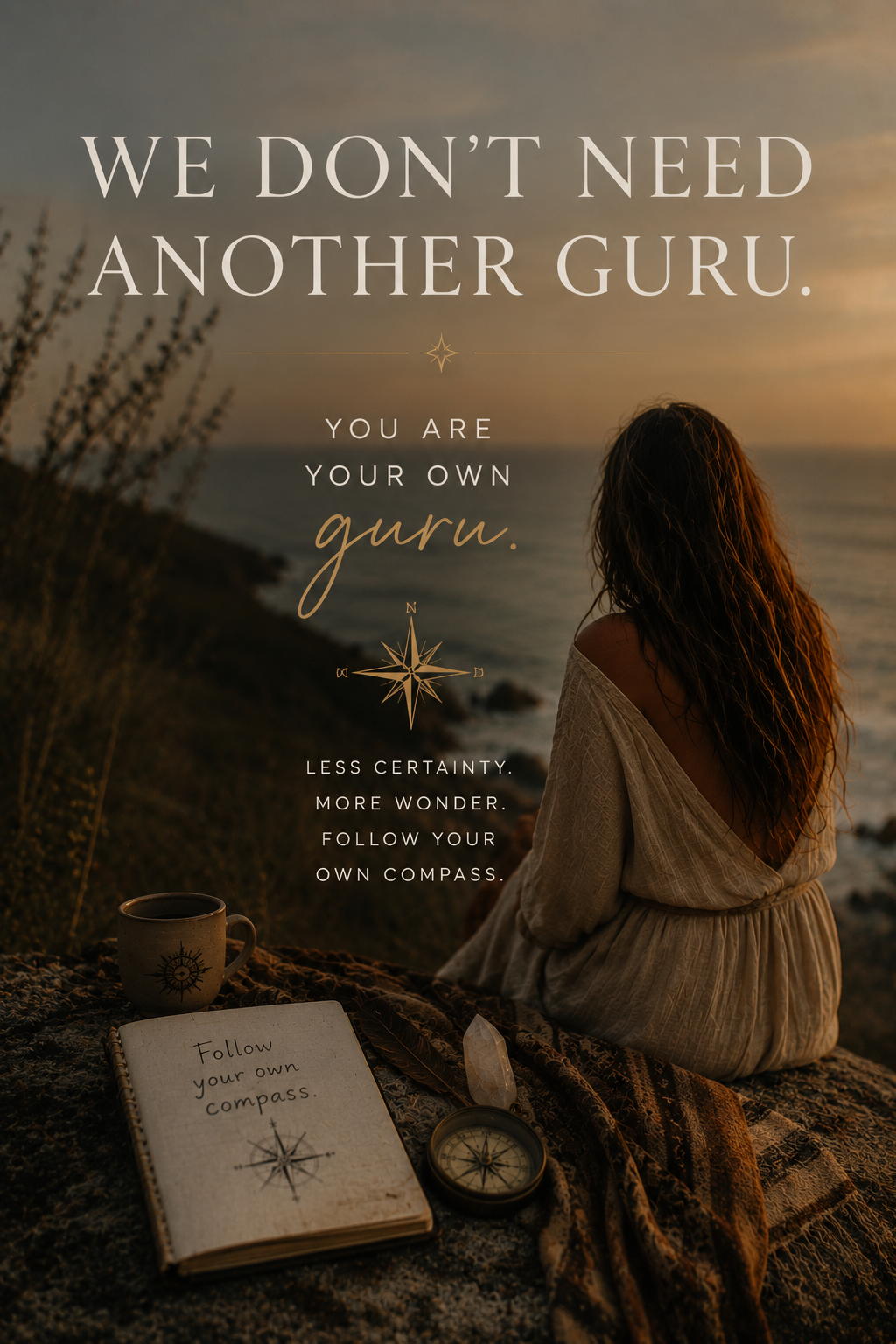
We Don't Need Another Guru
On Discernment, Dependency, and Remembering Our Own Way Home
This morning I woke with an old song echoing through my mind.
We Don't Need Another Hero.
I hadn't heard it in years.
I wasn't thinking about Mad Max.
Or Tina Turner.
Yet the melody refused to leave.
It followed me through coffee.
Through sunrise.
Through reading.
And somewhere between the music and the morning, one thought quietly landed.
We don't need another guru.
Once it arrived, I couldn't unhear it.
Over the past several weeks, I found myself watching a series of documentaries that, on the surface, had almost nothing in common.
Different teachers.
Different traditions.
Different cultures.
Different outcomes.
Yet beneath every story was the same question.
Why are human beings so willing to surrender the very authority that could protect them from manipulation?
Some followed charismatic spiritual leaders.
Others political figures.
Others religious movements.
Others wellness influencers.
Some found genuine healing.
Others found exploitation.
Many found both.
What fascinated me wasn't the personalities.
It was the pattern.
Again and again I watched intelligent, thoughtful, sincere people become so hungry for certainty that they slowly stopped consulting the quiet intelligence within themselves.
Someone else began interpreting reality for them.
Someone else became the compass.
That observation has lingered with me because it reaches far beyond gurus.
Anything outside ourselves can become one.
A pastor.
A politician.
A therapist.
An influencer.
A bestselling author.
A movement.
A philosophy.
Even an algorithm.
I don't use the word guru here only in its traditional Indian sense.
I use it more broadly.
Anything—or anyone—we surrender our inner authority to can become a guru.
This is where I think we have misunderstood both teaching and transformation.
A true teacher does not collect followers.
A true teacher cultivates discernment.
A true teacher gradually returns your authority to you.
A false teacher—whether intentionally or unconsciously—gradually relocates your authority to themselves.
The difference is subtle.
One relationship expands your capacity to perceive.
The other quietly replaces it.
Nature understands this instinctively.
The entire purpose of a nest is not perpetual dependence.
It is flight.
Healthy parents do not spend a lifetime convincing the fledgling to stay.
They prepare it to leave.
The nest was never meant to become its identity.
The same is true of genuine guidance.
The role of a guide is not to become indispensable.
It is to help another remember how to navigate without them.
Indigenous cultures understood this in ways that continue to move me.
Vision quests.
Wayfinding.
Walkabouts.
An elder might prepare you.
Offer stories.
Share wisdom.
Point toward the stars.
But there comes a moment when you walk alone.
No one can dream your dream for you.
No one can read the sky through your own eyes.
No one can undertake your journey on your behalf.
The guide does not become the destination.
They remind you that you have always been capable of finding your own way.
There is, perhaps, an uncomfortable truth beneath all of this.
Human beings are not simply seekers of wisdom.
We are seekers of certainty.
Certainty feels safe.
It quiets the ache of not knowing.
It promises solid ground beneath our feet.
And because of that, we have often mistaken confidence for truth, conviction for wisdom, and charisma for clarity.
Nature offers another way.
The humpback whale crosses entire oceans guided by currents, stars, and an intelligence science is still trying to understand.
Beneath the forest floor, vast mycelial networks move information, nutrients, and warning signals between trees without a central authority directing the exchange.
Night after night, generations of navigators crossed the Pacific by reading stars, swells, winds, birds, and clouds—not because someone handed them a map, but because they learned to enter into relationship with what was already there.
Life is filled with forms of intelligence that cannot be separated from relationship.
Nothing in nature survives by surrendering itself to a single authority.
It survives through participation.
Through responsiveness.
Through continual conversation with the living world.
Perhaps we have been searching for answers in places where what we actually needed was relationship.
Not relationship with another authority.
Relationship with our own instinct.
Our own discernment.
Our own participation in the living intelligence of life itself.
This is why I no longer believe our greatest need is another guru.
We need fewer voices asking us to orbit them.
And more guides willing to point us back toward ourselves.
The measure of a teacher is not how many followers remain gathered at their feet.
It is how many eventually walk away trusting themselves more deeply than when they arrived.
Perhaps that is what every genuine elder, navigator, storyteller, and mentor has always understood.
Their role was never to become the destination.
It was to remind others that they were capable of finding their own way.
To point toward the stars—
never to replace them.
Because the deepest forms of guidance have never ended in dependency.
They have always ended in freedom.
Freedom to observe.
Freedom to question.
Freedom to remain awake.
Freedom to encounter life directly rather than through someone else's certainty.
Perhaps we've misunderstood what wisdom looks like.
Wisdom is not the elimination of mystery.
It is the willingness to remain in relationship with it.
To become less obsessed with certainty and more devoted to discernment.
Less concerned with having every answer than with cultivating the presence to recognize what is true.
Children understand this instinctively.
They meet the world with wonder before they meet it with conclusions.
They explore before they categorize.
They ask before they assume.
Perhaps maturity was never meant to replace that wonder.
Perhaps it was meant to deepen it.
Maybe real liberation is not finally finding someone who has all the answers.
Maybe it is becoming so intimate with your own discernment that you no longer fear the questions.
You begin to trust the quiet intelligence that has always been guiding you.
Not because you have become certain.
But because you have become attentive.
Because your compass is no longer buried beneath the noise.
It has become readable again.
A true teacher gradually returns your authority to you.
A false teacher gradually relocates your authority to themselves.
The difference is not merely who they are.
It is where you find yourself standing after you've walked beside them.
Do you leave more dependent...
or more free?
Do you leave carrying someone else's certainty...
or trusting your own capacity to navigate the mystery?
Perhaps that has been the way home all along.
Ashe,
Your Wahine of the Sun
The Sacred Hiding in the Ordinary
I was listening to Cat’s in the Cradle again the other day.
It’s one of those songs that seems to hit differently depending on where you are in life. Now, the older I get, the less I hear a song about a father and son and the more I hear a song about attention.
About how easy it is to believe that life is happening somewhere else.
The father isn’t a bad man. He loves his son. That’s what makes the song so heartbreaking. He just keeps believing there will be more time. That he’ll be more available after the next project, the next obligation, the next adventure that needs tending to.
And before he knows it, the moments he thought would always be there are gone.
I’ve been thinking about that a lot lately.
Not just because of the song, but because it feels like we’ve built an entire culture around that same premise. The constant temptation to look beyond what is right in front of us.
A better opportunity.
A better version of ourselves.
A better relationship.
A better destination.
A better tomorrow.
We are constantly being invited to peer over the fence, convinced the greener grass exists somewhere else. And not staying present with what is in the current moment.
And the irony, of course, is that once we arrive there, at the perceived greener pasture, another fence appears.
Another patch of grass.
Another promise.
Another distraction.
I catch myself doing it too.
Thinking life will feel more settled after this challenge passes. More abundant after the next check arrives. More peaceful after the next hurdle is cleared. As if fulfillment is perpetually waiting just beyond the horizon.
But horizons have a funny way of moving.
And while we’re busy chasing what could be, the life we’re actually living continues to unfold.
Unnoticed.
Uncelebrated.
Unattended.
I don’t think the greatest threat to the sacred is suffering.
I think it’s distraction.
Not the dramatic kind. The ordinary kind.
The endless scrolling.
The constant stimulation.
The need to fill every quiet moment.
The subtle belief that whatever is next must somehow be more meaningful than what is now.
We’ve become so accustomed to excess—of information, entertainment, options, and noise—that stillness can feel uncomfortable. Boredom has become something to avoid rather than something to move through.
Yet some of life’s most meaningful moments require exactly what modern life discourages: sustained attention.
The sacred rarely arrives with fireworks.
More often it slips into our lives disguised as the mundane.
A conversation in the kitchen.
Coffee shared before the day begins.
A child asking you to watch.
A partner reaching for your hand.
The familiar routines that quietly stitch a life together.
Maybe that’s why the ordinary becomes so easy to overlook. Familiarity creates a kind of blindness. We stop seeing what we’ve stopped noticing. Simply because it has been acquired and we are off and distracted by other things.
Until something changes.
Until a child grows up.
Until a relationship fractures.
Until someone moves away.
Until a season ends.
Until we realize that what we dismissed as ordinary was never ordinary at all.
I’ve wondered lately if part of the challenge isn’t finding meaning, but recognizing it.
Learning to see the masterpiece hidden inside the mundane.
Learning that presence and appreciation are not passive acts but practices.
Learning that boredom is often the threshold to deeper attention.
Because what if the sacred isn’t hiding from us?
What if it has been sitting in plain sight all along, waiting patiently while we searched for something more interesting?
The tragedy of Cat’s in the Cradle isn’t that the father failed to find what mattered.
It’s that what mattered was there the entire time.
Maybe that’s why the song still endures.
It reminds us of something we already know but are constantly at risk of forgetting:
What we call mundane is often just the sacred before we have learned to miss it.
And perhaps the measure of a life well lived is not how much we accumulated, achieved, or experienced, but how fully we were present for the treasures that were hiding in plain sight all along
The Ecology of Love
Medicine in the Margins // No. 2
The Ecology of Love
How masculine and feminine flourish—and fracture—in relationship.
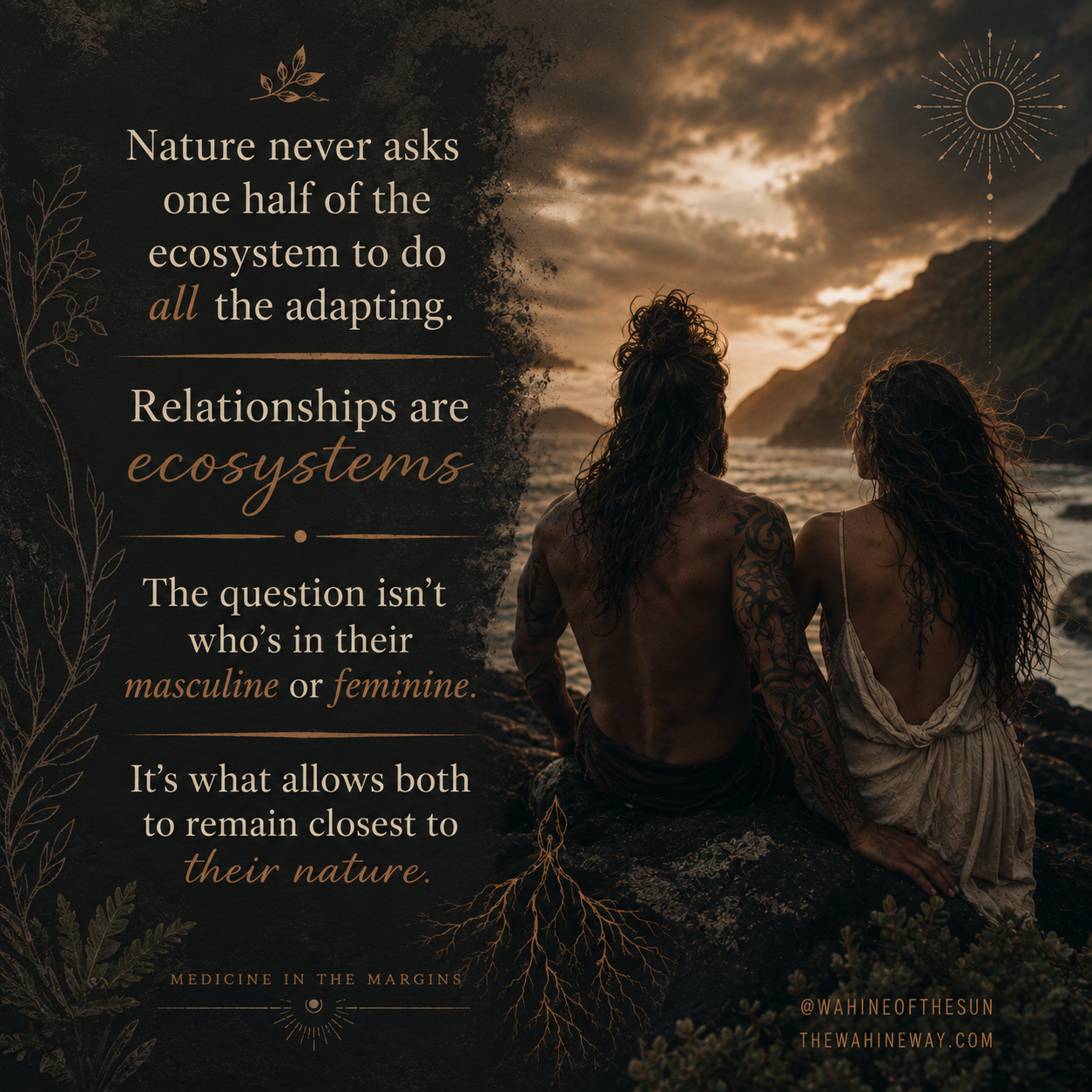
Medicine in the Margins // No. 2
The Ecology of Love
How masculine and feminine flourish—and fracture—in relationship.
I've never seen a forest ask one tree to hold up the entire ecosystem.
Nature doesn't work that way.
The river needs its banks.
The hawk needs the thermal.
Roots need rain.
Fire clears what can no longer sustain life, and water cools what has burned too long.
Every living system depends upon relationship.
Maybe love does too.
Nature is built upon complementary forces.
The mountain stands.
The valley receives.
The river moves.
The banks give it shape.
Roots reach downward while branches reach toward the light.
The tide advances.
The shore receives.
Neither exists to compete with the other.
Neither is complete in isolation.
Each allows the other to become more fully itself.
There are archetypal currents like this woven throughout the natural world, and I believe they exist within us as well, because we are living expressions of nature itself.
Across cultures, across generations, people have given them different names.
Masculine.
Feminine.
Yang and yin.
Sun and moon.
Not as rigid identities.
Not as prisons.
But as living qualities that, at their healthiest, exist in relationship.
To me, a grounded masculine often expresses itself through presence, protection, steadiness, direction, and strength in service of life.
A healthy feminine often expresses itself through receptivity, tenderness, intuition, nurturing, and the extraordinary capacity to cultivate life—in relationships, in families, in communities, and within herself.
These are not performances.
They are not obligations.
They are archetypal expressions that tend to emerge when the conditions are right.
Which is why I've always found it curious that so much of today's conversation asks us to cultivate these qualities as though they exist in isolation.
"Stay in your feminine."
"Step into your masculine."
Nature has never worked that way.
A river without its banks eventually loses its direction.
The banks without the river simply become dry earth.
Everything living is shaped by relationship.
Why would we imagine human beings are any different?
Before anyone misunderstands me, I don't believe men own masculinity or women own femininity.
Every one of us carries both.
The capacity to protect.
The capacity to nurture.
To lead.
To receive.
To hold.
To soften.
To build.
To surrender.
They're all human.
And yet there is something undeniably beautiful that often unfolds when a man is deeply rooted in his grounded strength and a woman feels safe enough to rest into her tenderness.
Not because either one is playing a role.
Because neither one has to.
Nature doesn't force a flower to open.
It creates the conditions where opening becomes possible.
That distinction changes everything.
Because when those conditions begin to fracture...
people adapt.
Not because they're weak.
Because they're alive.
I've watched women become harder than they ever wanted to be.
Not because they forgot how to love.
Because somewhere along the way, love stopped feeling safe.
Tenderness built walls.
Receptivity became vigilance.
Softness learned to carry a sword.
I've watched men do the same.
Strength became control.
Protection became hypervigilance.
Presence became withdrawal.
Not because masculinity failed.
Because survival quietly took the steering wheel.
They simply adapted to the weather they were living in.
The internet loves to ask,
"Who's in their masculine?"
"Who's in their feminine?"
I find myself asking a different question.
What happened that made their nervous systems stop trusting the environment they were standing in?
Even when that current environment may no longer be asking them to survive.
The answer isn't always found in the present.
Sometimes the present is simply where the past finally echoes loud enough for us to hear it.
And then sometimes the answer is found in the relationship we're standing in.
This is where our awareness of self allows for greater insight.
Long before we ever meet one another, our nervous systems have already been quietly collecting evidence.
Childhood.
Past loves.
Betrayal.
Abandonment.
Joy.
Safety.
Loss.
Each experience leaves its impression.
Layer upon transparent layer.
Until, without realizing it, we begin seeing the present through unfinished stories from the past.
I think we've all done this.
Expected someone to pay a debt they never incurred.
Protected ourselves from a danger that wasn't actually in front of us.
Blamed the person we were with for wounds they didn't create.
Not because we're cruel.
Because our nervous systems were trying to keep us alive.
Somewhere along the way, we stopped seeing the person standing before us for who they are and began seeing them through transparent layers left behind by someone else.
That's where the riverbanks begin to erode.
Not because love disappeared.
But because memory quietly began speaking louder than reality.
This is why I don't see healing as another self-improvement project.
Or another mountain we're supposed to climb until we're finally worthy of love.
Healing is another gateway to freedom.
True freedom.
Not because it erases what happened.
But because it slowly removes the transparent layers that keep yesterday from becoming today's reality.
It allows us to meet the person standing in front of us...and ourselves more truthfully
...instead of the memory standing behind us.
I can't think of a greater gift we can offer another human being.
Or ourselves.
Relationships are ecosystems.
The ones we have with others, and most importantly, the relationship we have with ourself.
Each nervous system is constantly speaking to the other.
Not through words.
Through presence.
Through consistency.
Through repair.
Through rupture.
Through whether it feels safe enough to exhale.
One of the greatest misunderstandings I see today is the expectation that a woman should remain endlessly soft regardless of the conditions she's living in.
And that a man should remain endlessly strong...
at all costs.
As though softness were proof of virtue.
And strength determined the measure of a man.
I don't believe that.
I think tenderness and strength are both sacred.
But sacred things require tending.
Nature has never expected a flower to bloom through every season.
Nor has she expected an oak to withstand every storm without losing a limb.
She simply asks each living thing to respond honestly to the conditions around it.
Perhaps we are no different.
Sometimes the most honest thing a nervous system can say is,
"I don't feel safe here."
That isn't failure.
It's information.
Awareness.
An invitation to become curious instead of condemning ourselves.
To pause long enough to ask,
"Why?"
Not every answer will be found in the relationship.
Some belong to stories we've carried for decades.
Others belong to the present.
Wisdom is learning the difference.
Grounded strength doesn't flourish beneath constant uncertainty any more than tenderness flourishes beneath constant vigilance.
Nature teaches us this without saying a word.
Every ecosystem responds to its conditions.
So do we.
Which is why I don't think the question is,
"How do I stay in my masculine?"
Or,
"How do I stay in my feminine?"
I think the better question is,
What kind of relationship allows both of us to remain closest to our nature?
Because I don't believe it's one person's responsibility to stay soft.
Or one person's responsibility to stay strong.
I believe it's both people's responsibility to become good stewards of the conditions where strength no longer has to become control...
...and tenderness no longer has to become armor.
That stewardship begins within each of us.
It asks us to recognize where old weather is still shaping today's landscape.
To notice when memory has begun speaking louder than reality.
To take responsibility for the ecosystems we carry inside us before asking someone else to live within them.
Then...
it asks us to turn toward one another.
Fractures will come.
Nature promises that.
Storms happen.
Trees lose limbs.
Rivers flood.
Fire passes through.
The question has never been whether love will experience rupture.
The question is whether the relationship knows how to respond afterward.
Whether two people can recognize when survival has quietly taken the place of connection.
Whether they care enough to pause.
To observe.
To repair.
To return.
Because perhaps that is the ecology of love.
Not perfection.
Not polarity.
Relationship.
The quiet, ongoing practice of creating conditions where another person no longer has to survive in order to belong.
I don't think we rehabilitate wildness by demanding that it perform.
Or by asking it to bloom on command.
We rehabilitate it the same way nature always has.
With patience.
With honesty.
With seasons.
With enough safety that what is true no longer has to hide.
Perhaps love has never been about asking another person to become more for us.
Perhaps it has always been about becoming conscious enough that we stop asking them to carry what was never theirs.
Because the healthiest relationships don't simply reveal who we are.
They reveal what still believes it has to survive.
And then, if we're willing...
they offer us something extraordinary.
Not the chance to become someone new.
But the invitation to observe.
To awaken.
To return.
Until one day, almost without noticing...
the wildness that was always ours begins to trust us enough to come home.
Ashe,
Your Wahine of the Sun
Being Regulated Is the Truest Form of Freedom
Medicine in the Margins // No. 1
Being Regulated Is the Truest Form of Freedom
And it probably doesn't look the way you think.

There is a version of me that can still walk into a room and mistake vigilance for wisdom.
She scans faces.
Reads tone.
Anticipates outcomes before anyone has spoken.
She calls it being prepared.
Sometimes she even calls it intuition.
But if I'm honest...
she's afraid.
I know her well because I have been her. But I am no longer her. She exists in memory, and yet still I feel her.
Maybe you have felt this contradiction too.
We spend years believing we are becoming ourselves while quietly becoming adaptations to everything we've survived.
We call it personality.
"I'm just independent."
"I don't trust easily."
"I'm always the strong one."
"I'm a fixer."
"I'm anxious."
"I'm driven."
Maybe.
Or maybe those are simply the names we've given the armor after wearing it long enough.
Here's the thing about armor.
If you wear it every day, eventually it stops feeling like something you're wearing.
It starts feeling like skin.
The body is brilliant like that.
It doesn't ask whether a strategy makes you happy.
It asks one question.
Did this keep us alive?
If the answer is yes...
it remembers.
And it keeps remembering long after the danger has packed its bags and gone home.
I don't say this from a mountaintop.
I say it as someone who has had to meet herself beneath the armor more than once.
Not because I wanted to.
Because life eventually stopped accepting my disguises. And in turn, so did I.
The beautiful thing about the nervous system is that it isn't interested in becoming a better version of you.
It isn't trying to make you more productive.
More spiritual.
More impressive.
It has only ever been trying to get you home alive.
That realization changed the way I looked at myself.
I stopped asking,
"What's wrong with me?"
And started asking,
"What has my body been trying so faithfully to protect?"
Those are very different questions.
One breeds shame.
The other breeds curiosity.
Curiosity is where rehabilitation begins.
Not fixing.
Not forcing.
Not another twelve-step morning routine that promises to optimize your humanity before breakfast.
God, we're obsessed with optimization.
Even healing has become something to perform.
We've somehow managed to turn the sacred work of becoming more ourselves into another competitive sport.
Who meditates longer.
Who cold plunges colder.
Who breathes better.
Who never gets triggered.
Nature has to be laughing.
A forest doesn't wake up trying to become a better forest.
The ocean doesn't apologize for having tides.
A hawk doesn't enroll in a masterclass on confidence.
Only humans have become so disconnected from their own nature that we've convinced ourselves authenticity is another skill to acquire.
The wild doesn't need improving.
It needs remembering.
This is why I believe being regulated is the truest form of freedom.
Not because regulated people are calm.
I've met plenty of calm people who were terrified.
Not because regulated people never get activated.
Life would have to stop being life for that to happen.
Being regulated means something far more rebellious.
It means yesterday no longer gets to hijack today.
It means fear is allowed a voice but not the steering wheel.
It means grief can sit beside you without convincing you the world has ended.
It means anger becomes information instead of identity.
It means joy no longer feels suspicious.
It means your body slowly realizes it can unclench.
That it no longer has to mistake every unfamiliar moment for danger.
That's freedom.
Not because life stopped asking difficult things of you.
Because you stopped abandoning yourself every time it did.
There are still days I catch myself reaching for old armor.
Days when vigilance masquerades as wisdom.
Days when old stories knock on the door.
The difference now is that I recognize them.
I don't mistake them for me anymore.
I know the way home.
And perhaps that's all regulation really is.
Not becoming someone who never leaves themselves.
But becoming someone who knows how to return.
Again.
And again.
And again.
Nature has never demanded perfection from us.
Only participation.
Every tide returns.
Every season circles back.
Every migration remembers its way.
Perhaps we do too.
Perhaps beneath every adaptation...
beneath every wound...
beneath every identity we've built to survive...
there remains something quietly, stubbornly wild.
Not waiting to be invented.
Waiting to be remembered.
Ashe,
Your Wahine of the Sun
Become The Sun Itself
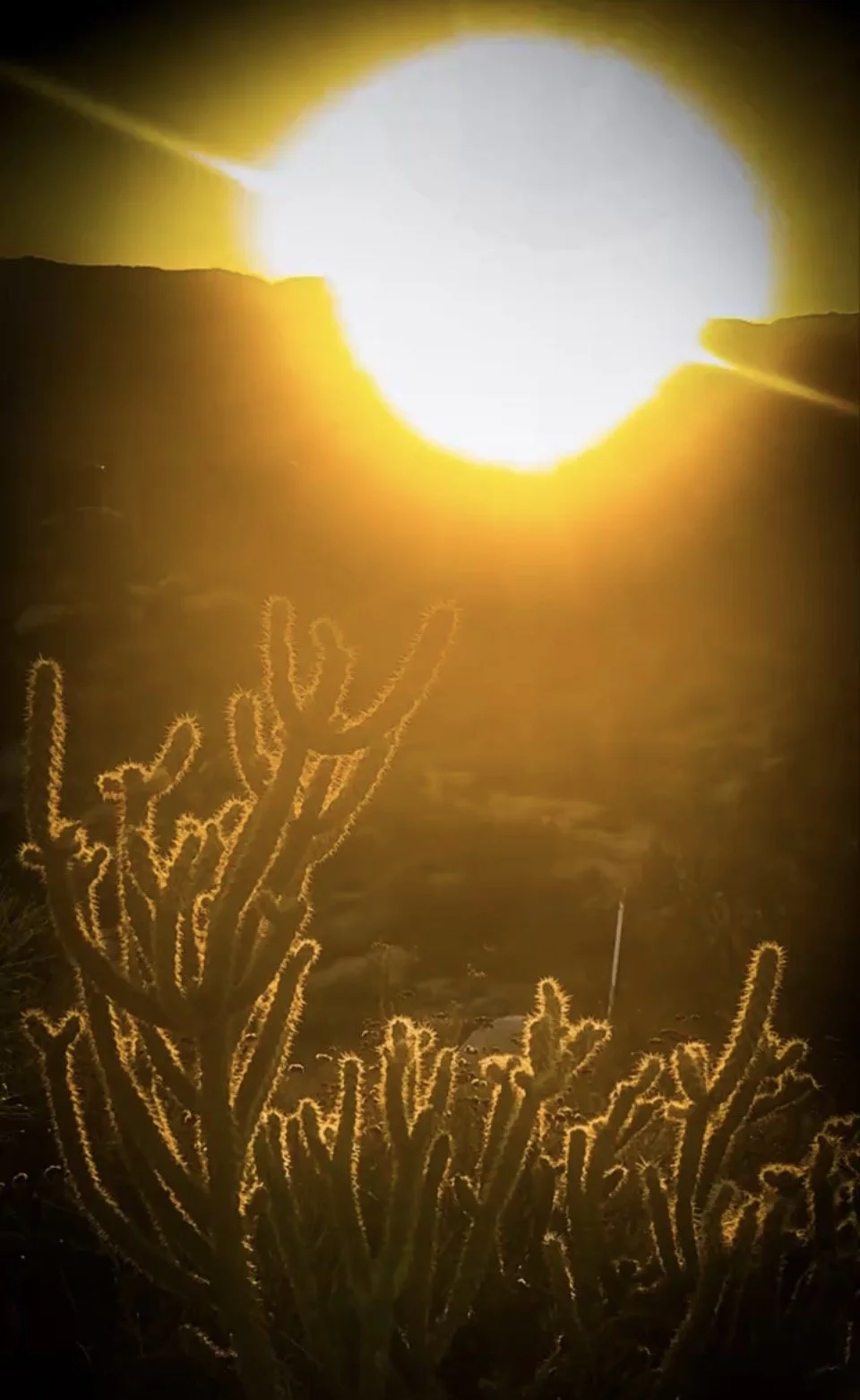
I was reading reflections on Rumi last night and then stepped out to watch one of the most magnificent sunsets I’ve seen in a long time, and something settled deeply into me.
A true seeker must learn not to cling too tightly to temporary joys and delights. Not because they are bad — they are beautiful. Sacred, even. But they are the rays and reflections of the sun, not the sun itself.
The rays dance across oceans, mountains, windows, and skin. They illuminate homes and create masterpieces across the sky. They make us stop in awe. But when the sun sets, those particular reflections disappear.
And yet the sun remains.
That realization moved through me while I watched the sky changing colors. Every evening, the sun creates something entirely different — new reflections, new radiance, new beauty. Never the same twice. Like mist. Like wind. Like seasons. Like emotion. Like so much of life.
The reflections evolve.
But the source remains eternal.
I think so much of our suffering comes from attaching ourselves only to the reflections — the fleeting moments, the forms, the temporary manifestations of beauty — and forgetting the deeper light they came from in the first place.
What if the work is not simply to chase the rays…
…but to become the sun itself?
To cultivate something within ourselves so steady, so rooted, so eternal, that even when we cannot see it clearly for a moment, we trust it still exists.
Because it does.
The sun does not cease to exist when it leaves your sight.
It is simply illuminating somewhere else.
There is something comforting in that.
To become the sun is to carry that inner light within yourself so fully that your presence naturally spills warmth onto others. Your joy becomes contagious. Your radiance becomes generous. Your reflections become offerings instead of grasping.
And maybe that is the difference between chasing light…
and embodying it.
Ashe,
Your Wahine of the Sun
Being The Answer For Yourself
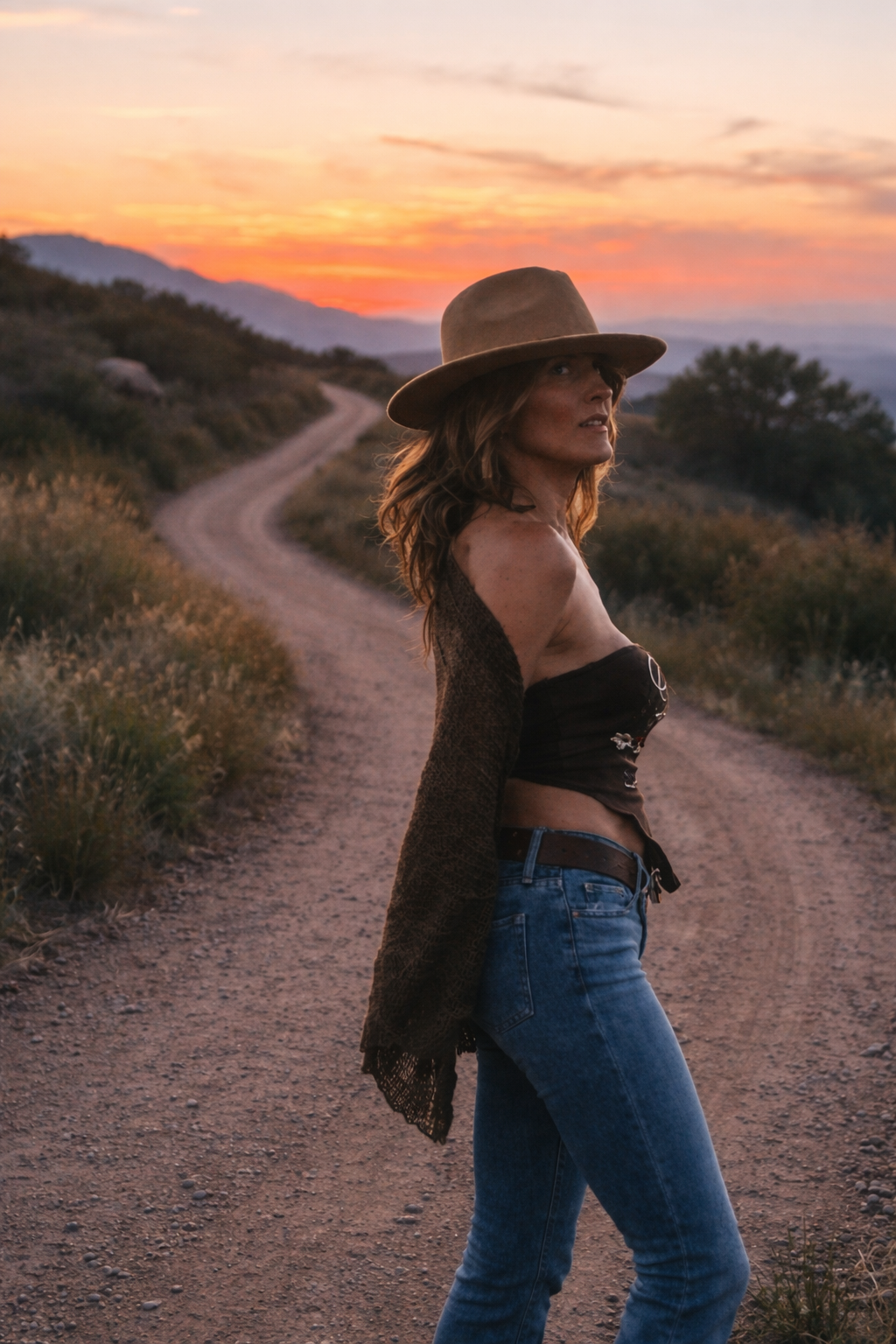
This morning, I pulled over on the side of a dirt road —
just to find quiet and calm that was all my own.
And a question came through me:
Do you ever feel like you are still in search of your place of belonging?
I’ve lived a life that, from the outside, looks free.
From the moment I got my first car, I was gone —
concerts, festivals, camping, road trips…
chasing the feeling of being wide open and alive.
And then life shifted.
I became a mother to five children,
and while that season asked me to root in different ways,
I still carried that same spirit —
bringing adventure, movement, and life into everything we did.
And when the time came, I moved again —
traveling the world for work,
living out of a suitcase,
untethered once more.
Experiencing firsthand just how dynamic this human life really is.
There is a kind of freedom in being the gypsy —
when nothing ties you down,
when the world feels like it’s yours to move through.
And I’ve loved that part of my life.
But I remember watching Chocolat.
The mother and her daughter in the film were gypsies —
wanderers by nature, moving from place to place,
carrying their way of life in their bloodline.
That part always spoke to me.
Because in many ways… it speaks to mine.
If you trace it back, the Shawnee were often labeled by history
as the “gypsy wanderers” among the tribes —
moving more fluidly than others,
never meant to be confined to one place for too long.
There is a rhythm to that kind of life.
A knowing.
A freedom.
But in the film, when she tries to root —
to build something, a chocolate shop, a life —
the town resists her.
They don’t want her there.
They try, in subtle and not-so-subtle ways, to push her out.
And then one day…
A group of gypsies arrive by river.
With their laughter.
Their music.
Their aliveness.
And she brings her daughter down to meet them.
And for that moment —
standing there, in the presence of people who lived like she did,
who moved like she did,
who understood without explanation —
they all felt it.
That quiet exhale.
To be accepted.
To be held.
To belong.
Even if only for a moment.
Because even a gypsy…
even someone who knows how to move, adapt, and live untethered —
still longs, at times,
to feel like they belong somewhere too.
And it’s not wrong to want that.
To want somewhere you can exhale.
Somewhere you no longer have to adjust, perform, or prove.
To want to land —
even if only for a moment.
But everything has to start within.
Because belonging is not something we arrive to —
it is something we stop leaving.
And that’s where the practice begins.
Not in searching for where we are wanted…
but in noticing where we are leaving.
The subtle moments.
The quiet compromises.
The times we override what we feel
just to maintain connection.
And sometimes, even when we’re no longer in those places —
when relationships have shifted,
living situations have changed,
and the structures we once relied on have fallen away —
there is a kind of dust that settles after the storm.
An in-between space.
And suddenly…
the gypsy doesn’t feel free.
She feels unanchored.
Restless.
Even… contained by what once felt familiar.
I know that feeling.
The difference between choosing the open road
and feeling like you have nowhere else to land.
And that’s exactly where I found myself this morning —
Pulled over on the side of a dirt road,
not searching for anything outside of me…
just trying to find a moment of quiet and calm that was my own.
And that question returned:
Do you ever feel like you are still in search of your place of belonging?
Because even when we recognize that unanchored feeling —
when the dust is still settling from transition and transformation —
we still need something to root into.
Not out there.
But here.
Within ourselves.
And that’s when the truth returns:
I am where I belong.
Not because everything around me is certain.
Not because I’ve found the perfect place or person.
But because I stopped leaving myself.
It doesn’t take away the feeling
of outgrowing spaces that once felt like home.
It doesn’t bypass the ache
of relationships that no longer hold you the same way.
It doesn’t erase the weight of transition.
But it brings you back to the one place
that was never meant to be conditional.
And when we begin to stay —
to remain with ourselves, even in moments of uncertainty —
something shifts.
We stop searching for permission to exist as we are.
And when we do…
belonging is no longer something fragile.
It is no longer dependent on anything outside of us.
We begin to recognize it as something rooted —
something that moves with us, rather than something we chase.
Just like nature never questions where it belongs.
The tree does not ask the forest if it is worthy of standing.
The ocean does not ask the shore if it is allowed to return.
They exist as they are —
fully, unapologetically, in rhythm with themselves.
And when I got back…
I sat down to finish a few final edits on my book.
I found myself in a section called The Practice of Belonging —
reading my own lived experience back to myself.
And I had to smile.
Because just moments before, I had thought to look outward —
for a meditation, a reflection, something to soothe me,
steady me, bring me back into focus.
And instead…
It was me.
Sitting in front of my own words.
Within a body of work that called me back home.
And maybe that’s what I want to leave you with today:
A gentle reminder to see the beauty you carry.
You are your answer.
Even on the days you don’t feel like you are.
Even in the moments you feel unsettled, in-between, or unsure.
You are not lacking anything.
You are everything you need.
Absolutely everything.
And as for the book…
It’s been a wild and beautiful season —
of publishing conversations, contract negotiations,
refinement, expansion, and returning deeper into my own work.
And I can’t wait to share it with you all.
Ashe,
Your “Gypsy” Wahine of the Sun ;)
Becoming the Moment: Nature Experiencing Itself
Becoming the Moment: Nature Experiencing Itself
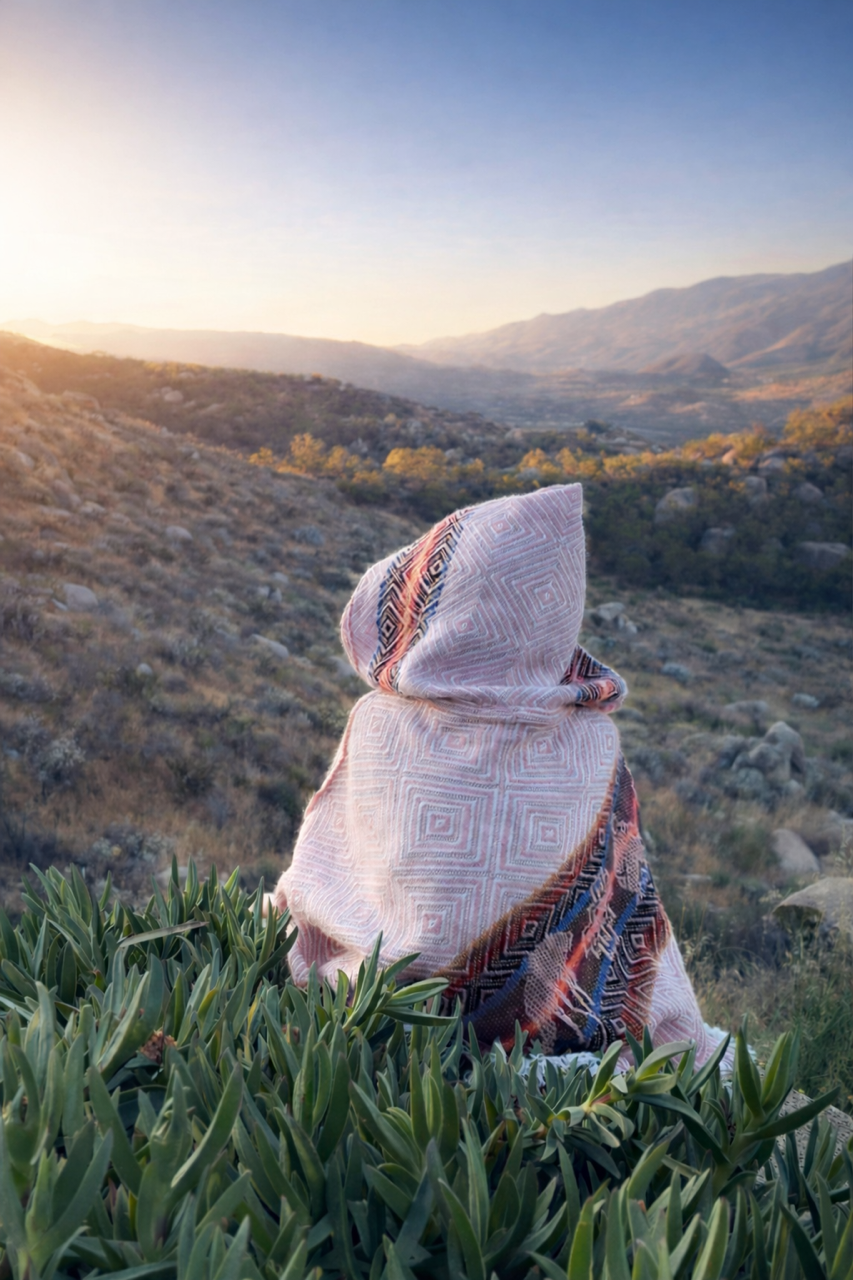
She Became the Moment
There are moments that don’t arrive loudly.
They don’t announce themselves as meaningful.
They don’t ask to be captured or shared or even understood.
They simply are.
I stepped outside to meet the sunrise,
thinking I was walking toward something.
But she was already there.
Wrapped in her poncho, perched on her little rock,
facing the valley as the light began to stretch across it —
still, quiet, completely at ease in her own presence.
She wasn’t searching.
She wasn’t asking.
She wasn’t trying to make meaning of anything.
She had become the moment.
And in witnessing her, something in me softened —
not because I learned something new,
but because I remembered something ancient.
There is a rhythm beneath all of this.
Beneath the noise, the striving, the constant reaching.
A rhythm that doesn’t rush.
A rhythm that doesn’t demand.
A rhythm that simply is.
And nature… never forgets it.
We do.
We forget in the pace of our lives,
in the way we’ve been taught to move, to produce, to prove.
We forget that we belong to something far more intelligent
than the mind that tries to organize it all.
But every once in a while,
we are given a moment like this —
where the remembering comes not through effort,
but through presence.
I sat beside her for a moment,
wrapped in the same quiet.
Felt the warmth of her small body,
the vastness of the land,
the softness of the rising sun.
And then I gave the moment back to her.
Because not everything is meant to be held.
Some things are meant to be witnessed…
and trusted to move through.
The sun continued to rise.
The puppies came tumbling in, full of life and chaos,
weaving play into stillness,
joy into quiet.
And somehow, none of it disrupted the moment.
It expanded it.
Because this is nature too —
not just the stillness,
but the movement within it.
Not just the silence,
but the life that dances through it.
And in that, another layer of remembering arrived:
We are not separate from any of this.
We are nature… experiencing itself.
Not when we try to be.
Not when we perform it.
But when we allow ourselves to return —
to the simplicity of presence,
to the intelligence of the body,
to the quiet knowing that lives beneath all the noise.
And maybe that is the invitation.
Not to seek more.
Not to become more.
But to remember what we were
before we were taught to forget.
Reflection
Where in your life are you trying to find something
that can only be remembered through stillness?
What happens when you stop reaching —
even for a moment —
and simply sit within what already is?
Ritual
Step outside today, even briefly.
Find a place where you can sit —
a rock, a step, the ground beneath you.
Do nothing.
Don’t reach for your phone.
Don’t try to make meaning of the moment.
Just sit.
Let the world move around you
without needing to move with it.
And notice…
what begins to return
when you stop trying to become anything at all.
Ashe,
Your Wahine of the Sun
When Everything Lives in the Same Water
There are moments where everything inside us feels tangled.
Thoughts.
Emotions.
Feelings.
All moving through the same internal space—
until we can no longer tell what is what.
Nature reflects this effortlessly.
A river carries everything within it—
sediment, current, reflection, life.
To the untrained eye, it is all just water.
But sit with it long enough,
and you begin to see the distinctions:
the surface moving one way,
the undercurrent another,
the stillness that exists even within motion.
What appears as one thing
is made of many.
Separating What Has Been Blended
There are distinctions that, once seen, cannot be unseen.
Thoughts are like wind—
they move quickly, shaping perception,
but they do not have substance of their own.
Emotions are like weather—
they build, shift, intensify, and pass.
But love, joy, and peace—
are not wind or weather.
They are more like the sky itself.
Unmoved by what passes through it.
Unaffected at its core,
even when it appears hidden.
Why They Feel So Fleeting
Most people don’t recognize these states as their baseline
because they only encounter them in brief moments:
when something takes their breath away
when exhaustion quiets the mind
when danger collapses thought into presence
Moments where—like a sudden clearing in the sky—
everything opens.
And for an instant,
we experience what was never gone.
Not because the sky appeared…
…but because the clouds parted.
The Return of Noise
And then, as naturally as clouds gather again,
the mind returns.
It names the moment.
Analyzes it.
Tries to hold onto it.
But the sky was never something to hold.
Only something to recognize.
Where the Energy Goes
Watch a plant in nature.
It does not strain toward every direction at once.
It grows where its energy is rooted.
But when something is constantly pulled outward—
uprooted, redirected, scattered—
growth becomes unstable.
In the same way, most of us are conditioned to move outward:
toward people
toward outcomes
toward validation
toward the next moment that might give us what we think we’re missing
Like vines reaching without a structure to root into,
our energy stretches… but does not settle.
And in that reaching,
we begin to associate love with attachment,
joy with stimulation,
peace with escape.
When Energy Returns
There are moments—quiet, unassuming ones—
where the reaching stops.
Like a lake at dawn,
before wind disturbs its surface.
No effort.
No grasping.
No trying to get somewhere else.
And in that return…
something becomes visible.
Not because it arrived—
but because nothing is distorting it.
The water reflects clearly.
The depth reveals itself.
Love, not as something to receive,
but as a state of being.
Joy, not as a peak experience,
but as quiet aliveness.
Peace, not as the absence of movement,
but as the ground beneath it.
What We’ve Misunderstood
We have spent so much time trying to create these states
that we have overlooked the way nature demonstrates them constantly.
The sky does not try to be clear.
The ocean does not try to be deep.
The earth does not try to be stable.
They are what they are—
when nothing interferes.
What we call “losing” these states
is often just the moment
we move away from our own ground.
A Different Orientation
The shift is subtle, but it changes everything.
Instead of asking:
How do I feel more love, more joy, more peace?
We begin to ask:
What is pulling me away from what is already here?
And even more simply:
Is my energy rooted…
or is it reaching?
Not Separate From What You See
Nature does not visit itself.
It does not step in and out of being what it is.
It remains—
through change, through movement, through seasons.
And so can we.
Thoughts will move like wind.
Emotions will shift like weather.
But there is something in us
that does not come and go.
And this is where the deeper recognition begins.
Not just that nature reflects something back to us—
but that we are not separate from what we are witnessing.
The same intelligence that moves the tides
moves through the body.
The same stillness that holds the sky
exists within us.
The same patterns of growth, rest, disruption, and renewal
are not just happening around us—
they are happening as us.
We do not need to define it.
We do not need to name it.
It is enough to observe
that everything we trust in nature—
its balance, its rhythm, its ability to restore itself—
exists within us as well.
So the question is no longer:
How do I become more aligned?
But simply:
What happens when I stop acting as if I am separate from what I already am?
Living It, Not Visiting It
The more often we return—
even briefly—
the more familiar this becomes.
Until one day, it is no longer something we touch in passing…
but something we recognize
not just as home—
but as ourselves.
✧ Reflection
Where have you been looking outside of yourself
for something that already exists within you?
✧ Ritual
Go outside.
Sit with one element—
sky, water, earth, or wind.
Watch it without naming it.
Notice what moves…
and what does not.
Then gently turn that same awareness inward.
Not as observation of something separate—
but as recognition.
Ashe,
Your Wahine of the Sun
When You Stop Being Who They Needed You to Be
The Disruption of Becoming
There is a quiet moment in this work—
often unspoken, often unexpected—
where something within you begins to shift.
Not in a loud, performative way…
but in a way that feels like a subtle return.
A remembering.
You begin to soften into yourself.
To notice the patterns you’ve been living inside of.
To feel the space between what is truly yours…
and what has simply been carried.
Awareness moves from your mind—
where it once lived as thought, concept, and understanding—
and begins to descend into your body.
And this is where everything changes.
Because when awareness stays in the mind,
it remains knowledge.
But when it drops into the body—
when it is felt, witnessed, and integrated—
it becomes wisdom.
And wisdom does not allow you
to continue living the same way.
At first, the changes feel intentional.
You begin to release habits that no longer serve you.
You make different choices.
You shift how you show up in your daily life.
There is a sense of empowerment in this—
a feeling of alignment.
You can see it.
You can name it.
You can choose it.
But then something else begins to happen.
Something less controlled.
Less predictable.
You begin to outgrow environments
that once felt like home.
Spaces that used to hold you
start to feel tight…
misaligned…
no longer reflective of who you are becoming.
And alongside those environments,
you may find yourself outgrowing belief systems too.
Beliefs you once inherited without question—
from family, from culture, from religion,
from the collective narratives you were raised within.
Beliefs about who you are.
Who you should be.
How life is supposed to look.
What is acceptable.
What is safe.
What is “good.”
And as your awareness deepens,
those structures begin to loosen.
Not always in rebellion—
but in quiet recognition:
This no longer fits.
And then…
the deeper layer emerges.
Your relationships begin to shift.
Not always because you’ve chosen distance—
but because you are no longer showing up
in the way you once did.
The roles you held…
often without realizing it…
begin to dissolve.
The one who kept everything together.
The one who made things feel good.
The one who bridged the gaps, smoothed the tension,
held the emotional weight.
You begin to set that down.
Not in rejection—
but in truth.
And what you may find is this:
People don’t always experience your alignment.
They experience your absence.
Where you once filled space,
there is now space.
Where you once overextended,
there is now boundary.
Where you once adapted,
there is now clarity.
And for those who were used to meeting you
in who you had been…
this can feel confusing.
Unsettling.
Even confronting.
You may be met with questions.
With resistance.
With projections that make you pause and wonder:
Am I changing too much?
Am I losing myself?
Am I getting this wrong?
But the truth is—
this is not you losing yourself.
This is you no longer abandoning yourself.
There may be moments where the pull to return
to what is familiar feels strong.
To slip back into the roles that once made things easier.
To explain yourself in ways that make others comfortable.
To reshape yourself just enough
to restore a sense of harmony.
But harmony built on self-abandonment
is not harmony.
It is maintenance.
And this is where sovereignty is truly tested.
Not in your ability to understand yourself—
but in your willingness to remain with yourself
when others no longer understand you.
There are parts of your life—
and your becoming—
that will not be fully understood by others.
And they are not meant to be.
You can hold love for people
without reshaping yourself to be received by them.
You can allow others their process—
their confusion, their perception—
without making it your responsibility to resolve.
Because this path…
this return…
was never about becoming who others needed you to be.
It was always about remembering who you are.
And as you stand in that—
even when it is quiet…
even when it is misunderstood…
even when it asks you to release what once felt certain—
You begin to experience something deeper than approval.
You experience alignment.
And from that place…
You no longer move through life
trying to hold everything together.
You move in relationship with what is true.
And that changes everything.
Reflection
Where in your life have you been showing up
in ways that feel familiar… but no longer true?
What roles have you been holding
that were never fully yours to carry?
And where are you being invited now
to remain with yourself—
even if it changes how others experience you?
Ritual: Returning to Yourself
Find a quiet space.
Place one hand on your heart…
and one on your lower abdomen.
Close your eyes.
Take a slow breath in…
and allow it to travel all the way down into your body.
Exhale gently.
Again.
And as you sit here, ask yourself:
Where am I still leaving myself
to keep things comfortable for others?
Do not search for an answer in your mind.
Let your body respond.
Notice any sensations that arise.
Any tightening.
Any softening.
Any emotion.
Stay with it.
No fixing.
No analyzing.
Just witnessing.
And when you feel ready, gently affirm:
I am allowed to remain with myself.
Even here.
Even now.
Take one more breath.
And return—
not as who you have been…
but as who you are becoming.
Ashe,
Your Wahine of the Sun
The Turning Point of Awareness
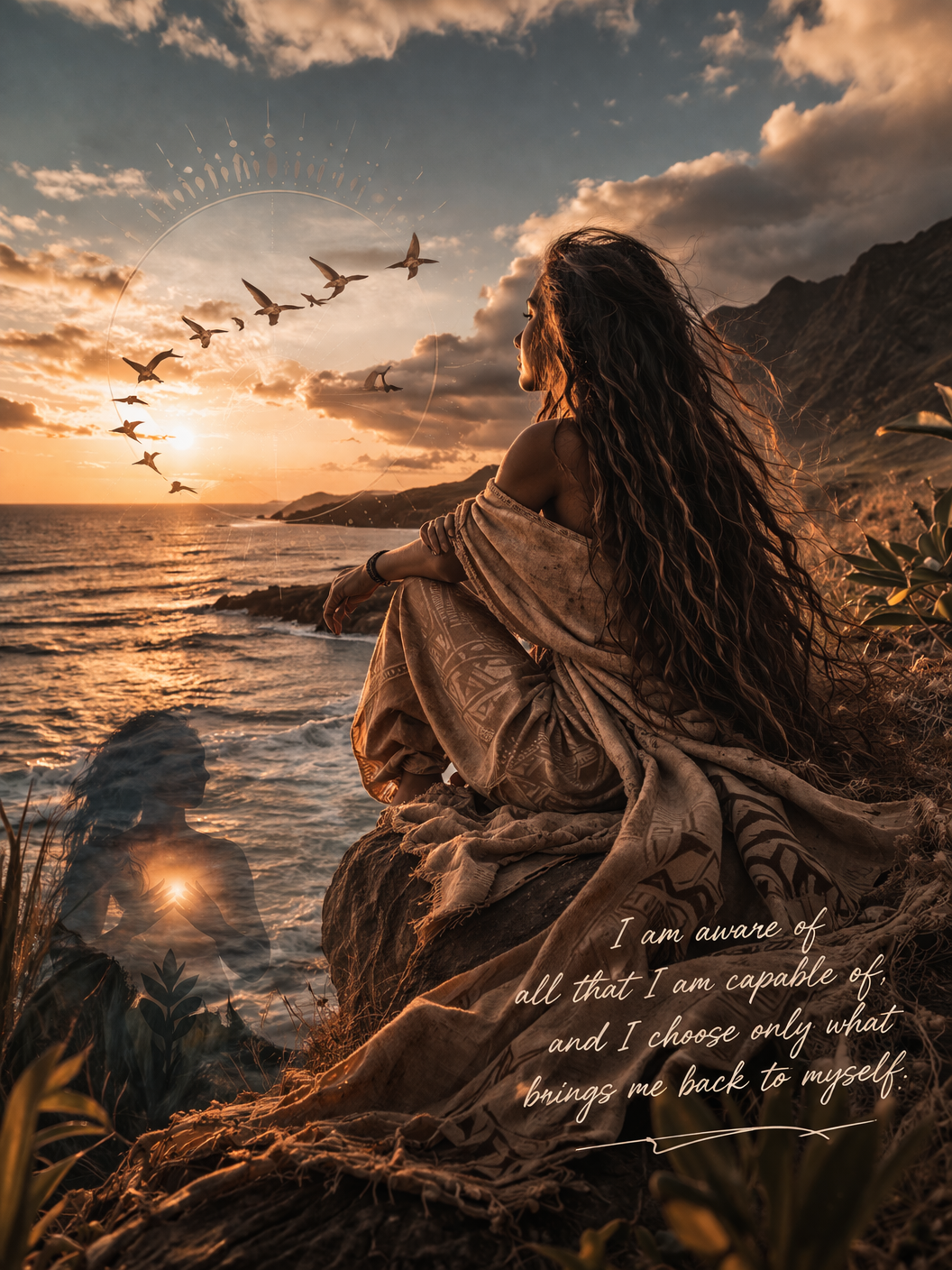
We Are Capable of Anything
We are all capable of anything.
That’s something we don’t always sit with long enough.
Not just the beautiful parts of ourselves—
but the reactive, the indulgent, the avoidant, the destructive too.
And when we’re honest about that…
something begins to shift.
Because instead of fearing it,
we start to see it clearly.
Nature Has Always Been Showing Us
Nature has always reflected this back to us.
The ocean gives life… and takes it.
The sun warms… and it burns.
The desert looks still, but it is constantly reshaping itself through harsh conditions.
There is no apology in nature for duality.
Only balance.
And when we begin to recognize that same duality within ourselves,
we’re not becoming something new…
we’re becoming aware.
And that awareness is an awakening to ourselves.
Awareness Changes How We Move
Awareness… changes how we move.
Not because we suddenly become perfect,
but because we begin to see the difference between
what we are capable of…
and what is actually aligned for us.
When Familiarity Becomes Identity
Because we’ve all done this—
We’ve called something “who we are”
simply because we’ve done it long enough.
Like walking the same path through a forest over and over again
until it starts to feel like the only way through.
Not because it is…
but because it’s familiar.
And over time, that familiarity becomes what we perceive as identity.
Without us ever really questioning it.
Childlike vs. Childish
In this process of awareness and contrast, I’ve noticed how easy it is for us to confuse being childlike
with being childish. Which can be a roadblock to awareness.
To be childlike is to be open.
Curious.
Present.
Fully alive inside the moment.
Which breeds a true sense of awareness.
But being childish is a lower frequency…
and we’ve all touched that too.
It’s when we grasp.
When we want without pause.
When we reach for something simply because it’s there
without considering what it creates.
“I Want It Now”
This divergence of realization often reminds me of Veruca Salt from Willy Wonka & the Chocolate Factory—
She “wanted it now.” Without regard to what was best for her and she fell the down the garbage shoot, because even the squirrels deemed her a bad nut. Funny… in reflection. But we have all been there.
And if we’re honest…
we all remember moments like that in our own way.
Not always out loud.
But internally.
The alignment feels off in one way or another, but we don’t listen.
Chasing what feels good in the moment,
without asking if it actually gives us life.
When Everything Starts to Feel Like Ours
When we’re moving without awareness,
everything can start to feel like it belongs to us.
Every desire.
Every impulse.
Every opportunity.
And we don’t always stop to ask—
Is this truly aligned?
Or is this just something I haven’t questioned yet?
The Shift Into Discernment
So when awareness comes in, quietly, like the sun rising over the mountains -
something softens… and sharpens at the same time.
Just like the sun.
We start to feel the difference. The light shines on us in a new way. We see with a new vantage point.
Between what expands us…
and what fragments us.
Between what brings us peace…
and what simply distracts us.
What Was Never Ours to Carry
And we begin to realize—
Not everything we’ve been carrying
was ever ours to begin with.
Some of it was learned.
Some of it was inherited.
Some of it was just repeated long enough
that it felt like truth.
We Are Here to Choose
But we are not here to be everything we are capable of.
That is the misnomer of the feel-good statements we tell ourselves.
We are simply here to choose.
To choose what aligns.
To choose what sustains us.
To choose what brings us back into ourselves
instead of pulling us further away.
A Different Kind of Freedom
And that kind of freedom feels different.
It’s not loud.
It’s not chaotic.
It doesn’t demand more and more.
It feels steady.
Like standing in the middle of the ocean,
feeling the movement beneath you
without being pulled under.
Or like walking through the desert,
where there is nothing extra to hide behind—
and somehow, that simplicity brings clarity.
The Real Question
In this place, we’re not teetering between extremes anymore.
We’re learning how to be with ourselves
fully.
And maybe that’s the real shift—
Not asking, “Can I do this?”
but gently asking,
“Does this feel true for me?”
What Alignment Feels Like
Because when something is truly aligned,
it doesn’t just feel good for a moment.
It settles.
It steadies.
It brings us back home to ourselves.
And that is the true liberation that sitting with a moment long enough for awareness to shine brings.
Returning to Self
From that place…
We don’t need to force discipline.
We don’t need to restrict or control.
We simply stop reaching for what was never truly ours.
We remember.
And we revel in the wild freedom that brings.
We stop fighting ourselves, the misalignment, the control of being subconsciously tied to things not meant for us - because awareness shifted our vision and now our frequency is resonating with our inner truth.
Reflection
May we each take the time to sit with these reflections and let them softly speak to our soul…
Where have we mistaken familiarity for truth?
What have we been carrying… that was never truly ours?
It is here we begin to encounter the turning point.
Mantra
May we always come back to this intuitive place in the moments our inner source is seeking refinement.
I am aware of all that I am capable of,
and I choose only what brings me back to myself.
Ashe,
Your Wahine of the Sun
What is The Wahine Way?
A philosophy of lived way finding, dream quest, and remembering the wisdom within.

What Is The Wahine Way?
Beyond the Book
The Wahine Way did not begin as a book.
It began as a remembering.
Long before the words were ever written, something in my life had already begun unfolding — a quiet awareness that the way we are taught to move through the world often leaves out something essential.
For many years I didn’t have language for what I was sensing. I simply knew that some of the definitions I had been given about success, strength, identity, and belonging did not fully capture the deeper rhythms of life I had come to feel.
And so, like many journeys of discovery, mine began not with answers but with listening.
Listening to the places that shaped me.
Listening to the stories that were passed down through the women in my family.
Listening to the subtle wisdom that exists in nature - if we are willing to slow down enough to notice it.
Part of my life has been shaped by my connection to Hawai‘i — its ocean rhythms, its reverence for land and ancestry, and the way stories are carried not simply as entertainment but as living guidance.
Another part of my life has unfolded on the mainland, among deserts and wide open skies where silence itself can feel like a teacher.
Though these landscapes are different, they share something profound.
Both invite us into relationship.
Both ask us to observe.
Both remind us that life moves in cycles rather than straight lines.
As a child, I heard stories from my grandmother and great-grandmother that carried this understanding naturally. Their stories were not lectures or philosophies. They were reflections of lived life — lessons woven into memories of the land, seasons, hardship, resilience, and quiet moments of insight that revealed themselves over time.
Looking back now, I realize those stories were teaching me something that many Indigenous traditions around the world have always known:
Truth is rarely something that can be handed to us fully formed.
It is something we come to recognize through experience.
Through relationship.
Through listening deeply enough to notice the patterns that life reveals.
In Polynesian culture, navigators practiced what is known as way finding — crossing vast oceans without modern instruments by reading the stars, the currents, the wind, and the subtle movements of the sea.
Their navigation depended not on rigid tools but on relationship with the living world around them.
In many Native traditions, there exists another form of journey — often referred to as a vision quest or dream quest — where individuals enter solitude in nature to listen for insight about their life, their purpose, and their place within the greater web of existence.
Though these traditions arise from different lands and peoples, they share a common understanding:
The deepest truths of our lives are not simply taught.
They are discovered.
And they are discovered most clearly when we step into direct relationship with life itself.
For me, nature was the first mirror where I began to see this.
The ocean teaches patience.
The desert teaches stillness.
The seasons teach that growth and rest are equally necessary.
Over time, I began to see how the outer world reflects our inner one — how the storms we witness in nature mirror the storms that move through our own emotional landscape, and how clarity often emerges only after we learn to sit with uncertainty long enough for understanding to arise.
In this way, the journey that eventually became The Wahine Way was never something I set out to create.
It was something I gradually came to recognize.
A pattern.
A philosophy.
A way of moving through life that honors both intuition and experience, reflection and action, solitude and community.
The word wahine means woman in Hawaiian, yet the deeper spirit of the work speaks to something broader than gender alone.
It points to a form of strength that is rooted not in control or domination, but in alignment.
A strength that arises when we stop forcing ourselves into identities that do not fully reflect who we are, and instead begin listening for the quieter intelligence that already exists within us.
Across cultures, Indigenous traditions have long carried this understanding — that wisdom lives not only in books or institutions, but in story, in land, in community, and in the body itself.
This is part of what makes storytelling such a powerful bridge. When we are able to resonate across cultures to see our commonality - it reminds us of something deeply familiar: that beneath the layers of modern life there exists an instinctive knowing that has never fully disappeared.
The Wahine Way grows from that same remembering.
Not as a doctrine to follow.
Not as a set of instructions.
But as an invitation.
An invitation to begin noticing the quiet signals that guide our lives.
An invitation to explore the places where our experiences, our questions, and our intuitions begin to form their own path.
Because at some point along any meaningful journey, something shifts.
What once felt like searching begins to feel like remembering.
The answers we thought we needed from the outside begin to reveal themselves within our own lived experience.
The path stops looking like something we must find — and begins to look more like something we are already walking.
In many ways, this is where the deeper meaning of the Wahine Way reveals itself.
It is not about becoming something new.
It is about coming home to something ancient within ourselves.
A compass that has always been present beneath the noise of expectation, conditioning, and identity.
And just as my own journey did not end with the writing of a book, this work has continued to unfold into something larger.
The Wahine Way has become a living ecosystem — expressed through writing, reflection, learning pathways, gatherings and conversations that invite others to explore their own process of remembering.
The Living Library on Wahine of the Sun continues to grow as a space for shared insight.
The Wayfinding Pathways offer guided explorations for those who feel called to step more intentionally into their own journey.
And through community, story, and relationship, the work continues to evolve in ways that I could never have fully planned.
Because ultimately, the Wahine Way does not belong to any one person.
It lives wherever someone begins listening deeply enough to recognize the wisdom that has always existed within them.
Like a navigator reading the stars, or a seeker sitting quietly in the wilderness waiting for clarity to arrive, each of us carries the ability to find our way.
The work simply holds a lantern along the path.
The journey itself is yours.
The Moment We Become Aware, We Return to Clarity Within: Reframing the Lens of Fear
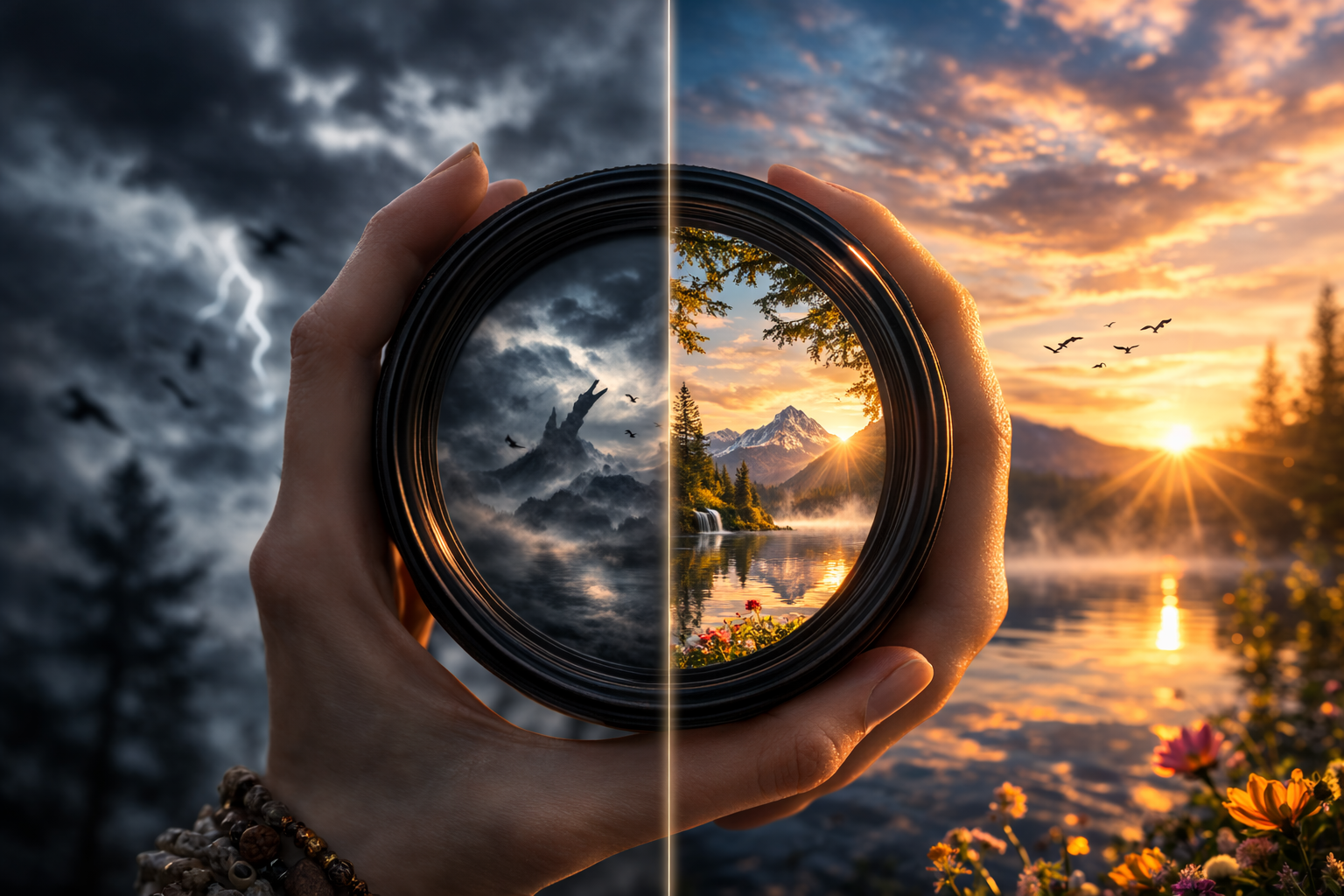
Fear is one of the most powerful forces shaping human behavior and experience, yet most of the time we do not recognize it when it appears.
Fear rarely introduces itself honestly.
It doesn’t say, “I am afraid.”
Instead, it disguises itself as anger, defensiveness, protection, withdrawal, criticism, control, or distance.
These reactions can feel like the problem in a relationship, but more often they are simply expressions of something deeper.
Fear.
Fear of loss.
Fear of rejection.
Fear of humiliation.
Fear of abandonment.
Fear of not being valued.
When fear activates inside the nervous system, perception begins to narrow. The body senses threat, and the mind moves quickly to interpret what is happening.
Stories appear almost instantly.
Something isn’t right.
I may need to protect myself.
This could be dangerous.
Once these stories take hold, we stop seeing clearly.
Instead of seeing the person in front of us, or the situation at hand, whatever it is that is evoking the emotion - we begin respond to the projection of our fear.
And that is how disconnection begins. With ourselves, and with others.
When Fear Shapes the Lens
Fear most often becomes visible in relationship. Because relationship requires vulnerability.
It asks us to be seen, to trust, and to move beyond the safety of our own inner world.
Because two lives, two histories, and two nervous systems are involved, there is always an element of risk.
And when the mind senses risk, fear can quietly enter the lens through which we interpret what is happening, quite unnoticeably at first.
But fear does not only appear in our relationships with others.
It can also arise in the relationship we have with ourselves.
Fear can live inside the expectations we have placed upon our own lives.
It can appear within the systems and beliefs we have inherited.
It can surface the moment we begin questioning the roles we were taught to play.
When someone begins to live more honestly, speak more clearly, or step beyond the boundaries that once defined them, fear often rises.
Not because something is wrong.
But because the familiar is changing.
This is why cultivating a sense of safety within ourselves is so powerful.
When we learn to create inner steadiness, fear loses much of its grip on our perception.
We begin to see more clearly.
And from that clarity, we can recognize how fear sometimes shapes the lens through which we interpret the world around us.
Two people can be standing in the same moment, yet experiencing completely different realities.
Not because one of them is lying or manipulating.
But because fear has shaped the lens through which the moment is being interpreted.
A simple pause can feel like distance.
A difference in perspective can feel like disapproval.
A boundary can feel like rejection.
Fear distorts the signal.
What was once simple becomes complicated.
What was once neutral begins to feel threatening.
And the moment begins responding to the fear instead of the truth.
The Survival Patterns of Fear
When fear rises in the nervous system, we can instinctively move into one of four patterns, if left unchecked.
We try to control the situation in order to feel safe.
We withdraw to protect ourselves from potential pain.
We attack or criticize to defend our vulnerability.
Or we abandon our own truth to preserve connection.
None of these reactions come from cruelty.
They come from a nervous system attempting to survive.
But survival patterns often destroy the very connection we are trying to protect.
The Power of Awareness
The moment we become aware of fear as it arises, something begins to shift.
Instead of reacting immediately, we can pause.
We can observe what is happening inside of us.
And we can ask a powerful question:
Is this fear… or is this truth?
That pause is the beginning of self-mastery.
Because when we recognize fear without becoming consumed by it, we regain the ability to choose how we respond.
Nature Reminds Us
And if we slow down long enough, nature quietly reminds us that life is not nearly as complicated as we often make it.
A deer standing at the edge of a lake does not create stories about the forest.
It simply senses what is present.
If danger is real, the body moves.
If danger is not present, the animal returns to stillness.
There is no spiral of imagined threats.
There is only awareness, response, and return to balance.
Humans possess the same biological intelligence.
But when our thoughts move faster than our awareness, we lose connection with that natural rhythm.
Returning to Clarity
True freedom is not the absence of fear.
Fear is a natural part of being alive.
True freedom is the ability to see fear clearly without allowing it to control perception.
This is where awareness becomes powerful.
When we learn to regulate our nervous system and observe our thoughts without immediately believing them, we begin to see the difference between fear and truth.
The lens clears.
And what once looked threatening can often be seen for what it truly is.
A misunderstanding.
A projection.
A moment asking for curiosity instead of defense.
When we learn to see these moments for what they are, something important begins to change within us.
We stop reacting to every passing signal as if it were a threat.
Instead, we begin to recognize the difference between what is actually happening and the stories fear tries to create.
This clarity reconnects us to something deeper inside ourselves — a steady place that exists beneath the noise of our thoughts and the expectations of the world around us.
When we remain connected to that inner source, even while uncertainty or pressure exists around us, we begin operating from a place of inner sovereignty.
Inner Sovereignty
Inner sovereignty is not about controlling the world around you.
It is about remaining rooted in your own clarity.
In a world that often pushes people to conform, control, and compartmentalize, true wildness is not chaos.
True wildness is authenticity.
It is the ability to remain connected to your own inner compass even when external voices, expectations, or fears attempt to pull you away from it.
When we cultivate safety within ourselves, fear no longer dictates how we interpret every moment.
We can listen without collapsing.
We can observe without reacting.
We can choose our responses with intention instead of survival.
This is the quiet power of wild sovereignty.
Not dominance.
Not control.
But the freedom to remain connected to truth within yourself, regardless of the noise around you.
And from that place, connection with others becomes clearer, calmer, and far more honest.
Reflection
Take a moment to pause and gently turn inward.
Where in your life do you notice fear shaping the story?
Is there a relationship, a conversation, or a situation where your mind may be filling in the blanks before the full truth is known?
When fear arises, it often moves quickly. The body tightens, the mind creates explanations, and suddenly a simple moment begins to feel heavy or complicated.
Awareness allows us to slow that process down.
Instead of reacting immediately, we can notice what is happening within us.
We can ask ourselves:
Am I seeing clearly right now?
Or am I seeing through the lens of fear?
That moment of curiosity is powerful.
Because the moment we become aware, the lens begins to clear.
A Practice in Awareness
The next time you feel fear begin to shape a story in your mind, pause.
Take one slow breath.
Instead of reacting, simply observe what is happening inside you.
Ask yourself:
What am I feeling right now?
What story is my mind creating?
Is there another way to see this moment with curiosity instead of assumption?
Awareness does not mean ignoring fear.
It means allowing fear to pass through without allowing it to define the truth.
A Mantra for Returning to Clarity
When fear begins to cloud perception, return to this simple remembrance:
I pause.
I breathe.
I see clearly again.
Or simply:
Clarity lives within me.
Because the moment we become aware…
we return to clarity within.
Ashe,
Your Wahine of the Sun
The Storm Before Clarity: Trusting the Process of Confusion

Confusion is not always a negative experience.
Sometimes it is simply the storm that arrives before clarity returns.
We often interpret confusion as a problem — something that must be solved immediately, something that signals we have lost our way. But nature teaches us another way of understanding.
The sky darkens before the rain clears the air.
The ocean churns before it settles into glass again.
A seed breaks apart underground before it ever reaches the light.
Confusion does not always mean we are lost.
Sometimes it means an old clarity is dissolving and a new one has not yet formed.
Like a sailor who sees clouds gathering on the horizon, wisdom is not found in panic but in presence. We batten the hatches, secure what matters, and remain steady at the helm.
Not fearful.
Mindful.
Because storms do not last forever.
They pass.
And when they do, the air is often clearer than it was before.
Clarity rarely arrives without first moving through the territory of uncertainty.
Nature reminds us of this constantly — if we are willing to watch.
Reflection
Take a moment to sit with your own inner weather.
Where in your life are you currently experiencing confusion?
Is there a place where things feel uncertain, unclear, or unsettled?
Rather than rushing to resolve it immediately, gently ask yourself:
• What might this moment be asking me to notice?
• Is something old dissolving that once gave me certainty?
• What truth might be waiting beneath the surface of this confusion?
Just as a storm stirs the air before it clears it, confusion can be the movement that makes space for deeper clarity.
Let it speak before you try to silence it.
Reframing
Confusion does not always mean you are off course.
Sometimes it means you are no longer willing to live inside answers that no longer fit who you are becoming.
Clarity often arrives after the moment when we admit we do not yet see the full picture.
This is not failure.
It is evolution.
Affirmation
I allow space for clarity to emerge.
I trust that even moments of uncertainty are guiding me toward deeper understanding.
Like nature, I move through seasons — and clarity will return.
Sometimes clarity does not arrive by force, but by allowing the storm to pass.
Wahine of the Sun ☀️
Your Next-Level Self Doesn’t Fit Your Past
There comes a moment in every expansion where you realize something quietly unsettling:
Not everyone can meet you in your growth, rise, or season of expansion.
Some people love the version of you they first understood.
The container they met you in.
The role you played in their story.
The size that felt familiar.
But growth reshapes you.
And when you begin to outgrow old rooms, it can feel disorienting — not because you are wrong, but because the space around you hasn’t adjusted yet.
This is where a subtle doubt can creep in.
Not because you suddenly forgot who you are —
but because the feedback around you shifts.
When you expand, you may feel:
• Questioned in ways you weren’t before.
• Compared in ways that feel unfamiliar.
• Gently (or not so gently) reminded of who you “used to be.”
• Nudged to stay a little smaller so things feel comfortable again.
It doesn’t always look like resistance.
Sometimes it looks like nostalgia.
Sometimes it looks like concern.
Sometimes it sounds like humor that lands just a little off.
And if you’re not anchored, you can momentarily wonder:
Am I too much?
Am I moving too fast?
Should I tone it down?
But here is the truth:
Your next-level self doesn’t fit your past.
And that is not betrayal.
That is evolution.
The lesson is not to harden.
The lesson is not to fight.
The lesson is to anchor.
Expansion without shrinking.
Compassion without regression.
Growth without apology.
This is the discipline.
Because growth can feel unfamiliar before it feels celebrated.
When you change, some people recalibrate with you.
Some surprise you.
Some rise alongside you in ways you didn’t expect.
And some — even those who once walked through fire beside you — may struggle when the dynamic shifts.
That doesn’t make them wrong.
And it doesn’t make you arrogant.
It simply means your trajectory changed.
This is why staying connected to your inner voice— your authentic source — matters more than ever during expansion.
When you are grounded in who you are:
You don’t shrink to be digestible.
You don’t overexplain your becoming.
You don’t search the room for permission to rise.
You stay steady.
You allow others the dignity of their own timing.
And you allow yourself the dignity of your own growth.
Release the fear of being misunderstood.
Release the need to be universally validated.
Fortune follows the woman who keeps becoming.
Grow anyway.
Trust Fall with The Divine
There are seasons in life when everything converges.
Not gently.
Not conveniently.
But precisely.
Conversations collide.
Opportunities surface.
Relationships unravel or reweave.
Old identities feel too tight.
New ones feel too large.
And somewhere in the center of it all, you can feel it:
Alignment.
Not the kind you manifest from a vision board.
The kind that manifests you.
The Divine does not shout.
It orchestrates.
It rearranges what you thought was stable.
It removes what you swore you needed.
It introduces what you didn’t plan for.
It expands you beyond the perimeter of who you were comfortable being.
And in that expansion, there is a moment.
A pause.
A ledge.
That moment where you see what is happening.
And you have a choice.
You can grip harder.
You can negotiate.
You can delay.
You can run back toward the familiar.
Or —
You can position yourself for the trust fall.
A trust fall with the Divine is not passive.
It is not naive.
It is not reckless surrender.
It is the conscious decision to align your inner source with the greater orchestration moving through you.
It is saying:
I see what is unfolding.
I may not understand the timeline.
I may not recognize the terrain.
This may not include everything or everyone I imagined.
But I trust the intelligence that lives within me — and beyond me.
Sometimes we resist because the path is not the one we planned.
Sometimes we shrink because the call is larger than our current container.
Sometimes we hesitate because stepping forward means leaving behind versions of ourselves — and people — that once felt essential.
But alignment is rarely tidy.
It is exact.
When the Divine converges with your inner source, you will feel both terror and clarity.
You will feel grief and ignition.
You will feel the ground shifting and your spine strengthening at the same time.
That is how you know it is real.
The trust fall is the bridge between who you have been and who you are becoming.
It is the moment you stop trying to micromanage the current and instead let yourself be carried by it — not as driftwood, but as a conscious participant.
This is not about blind faith.
It is about remembering that the same intelligence that spins galaxies lives in your nervous system.
The same rhythm that guides the tides pulses in your blood.
The same divine architecture that orders seasons is reorganizing you.
You are not being dismantled.
You are being aligned.
And when you finally lean back — when you stop bracing and allow yourself to be held —
Something extraordinary happens.
You discover you were never falling.
You were being caught.
By your own highest self.
By your own inner source.
By the Divine intelligence that has always known where you were meant to land.
Your greatest self is not built through force.
It is revealed through trust.
A Closing Ritual: The Trust Fall
Before you leave this page, pause.
Stand up if you can.
Place your feet flat on the ground.
Roll your shoulders back.
Open your palms.
Now gently lift your arms — not dramatically — just enough to feel your chest expand.
Take one slow breath in through your nose.
And as you exhale, whisper internally:
I release the grip.
Notice where your body still braces.
Notice where you are negotiating with life.
Notice where you are trying to control timing, outcome, or perception.
Now breathe again.
This time say:
I am aligned, not abandoned.
Let that land.
The trust fall is not about collapsing.
It is about allowing yourself to be held by the same intelligence that placed the call in your chest.
You do not have to understand the whole path.
You only have to soften enough to take the next step without bracing.
When you are ready, lower your arms.
But keep your spine tall.
Because surrender is not small.
It is powerful.
And today, you chose to lean.
The Medicine of the Fire Horse: When Bypassing Frequency No Longer Serves
The Medicine of the Fire Horse
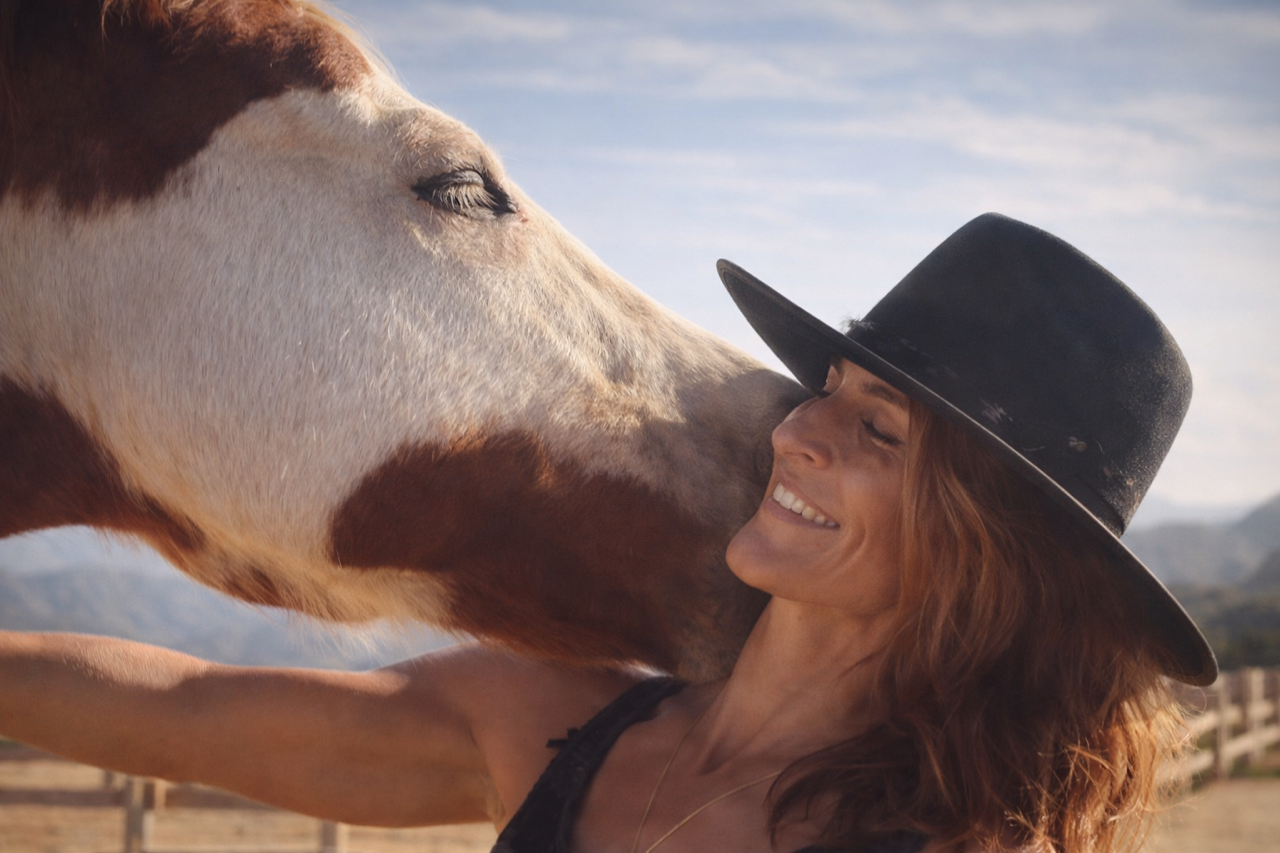
The Year of the Fire Horse is approaching.
And with it, a collective hunger for movement.
For momentum.
For power.
After a season of deep shedding, unraveling, and release,
it makes sense.
We want lift-off.
We want evidence.
We want motion.
But the medicine of the horse is not found in speed.
It is found in frequency.
There is no bypassing frequency.
Everything—
intuition, perception, truth, embodiment, manifestation—
moves through resonance first.
Before something becomes form,
it becomes vibration.
Before something becomes action,
it becomes coherence.
The horse understands this.
A horse’s heart generates an electromagnetic field far larger than our own.
It radiates outward, influencing the nervous systems around it.
They are not simply powerful animals.
They are regulators.
They feel what is unspoken.
They sense what is hidden.
They respond to what is unresolved.
Your breath.
Your tension.
Your grief.
Your joy.
Your truth.
It all arrives before your words.
This is why people soften around horses.
Why tears surface.
Why defenses fall.
It is not sentiment.
It is resonance.
Many of us have just moved through a season of intense mirroring.
We were shown ourselves through others.
Through relationships.
Through loss.
Through collapse and clarity.
The Year of the Snake asked us to shed.
To release.
To unravel old skins.
And often, the last days of a cycle are the most intense.
For me, these final days have had a bite.
Residual shedding.
Letting go of old thoughts, emotional patterns, triggers,
grief, self-doubt, quiet not-enoughness.
All of it.
It feels tender.
Like recovery after surgery.
Open.
Sensitive.
Unarmored.
And in that space,
it is easy to want a quick fix.
A distraction.
A rush forward.
Not because we are weak.
Because vulnerability still carries pain.
But wisdom chooses regulation.
And that is what the horse teaches.
Now, the Fire Horse asks us to integrate.
The mirror turns inward.
You become the field you are standing in.
This year reminds us to lean in, not just gallop.
Horses don’t move from noise.
They move from resonance.
From breath.
From presence.
From truth.
They feel coherence.
And they reflect it back.
They do not force alignment.
They embody it.
This is why trauma work with horses is so powerful.
Their presence alone can invite the nervous system into safety.
Into rhythm.
Into coherence.
They remind us how to settle back into ourselves.
Even their relationship to rest reflects this wisdom.
Horses only lie down deeply when another stands guard.
They understand trust.
They understand interdependence.
They understand nervous system safety.
This is not a year to glorify exhaustion.
It is a year to ask:
Where am I regulated?
Where am I supported?
Where can I soften without self-abandonment?
Because rest is not retreat.
It is calibration.
We are being invited into momentum.
Yes.
But not frantic movement.
Not performative power.
Not hollow expansion.
Aligned momentum.
Resonant power.
Embodied leadership.
The Fire Horse does not run from disconnection.
She listens first.
Feels first.
Aligns first.
Then she moves.
There is no bypassing frequency.
This year will amplify what you are truly carrying.
Not what you perform.
Not what you present.
Not what you defend.
What you embody.
Your nervous system.
Your breath.
Your unspoken stories.
Your grief.
Your joy.
Your earned wisdom.
It all travels through resonance.
And it shapes what comes next.
So the real question is not:
What are you building?
What are you proving?
What are you chasing?
The real question is:
What are you carrying into this new year?
Because that is the field you will walk in.
That is the rhythm you will move from.
That is the power you will manifest through.